


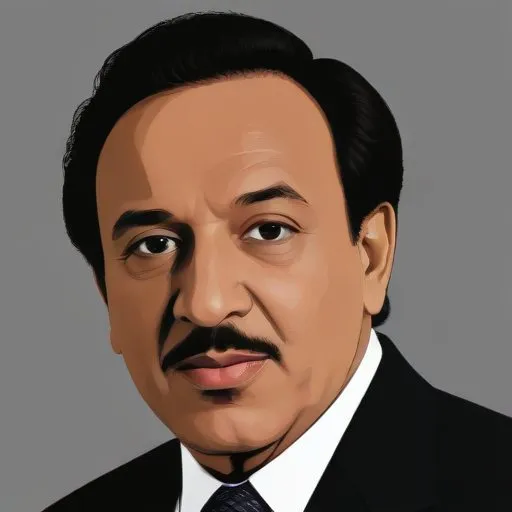
A Pakistani politician who served as the Minister of Interior, known for his efforts to combat terrorism and improve national security. He was a prominent figure in Pakistani politics during the 2000s.
Rehman Malik is a name synonymous with unwavering dedication to combating terrorism and a trailblazer in Pakistan's political landscape. As the former Interior Minister of Pakistan, Malik's fearless approach to tackling terror groups and his relentless pursuit of justice earned him a reputation as a maverick politician.
Before venturing into politics, Malik had a distinguished career as a special agent in the Federal Investigation Agency (FIA). His remarkable tenure as the Additional Director General of the FIA from 1993 to 1996 saw him coordinate successful counter-terrorist operations, including the high-profile extradition of Yousaf Ramzi to the United States in 1995.
Malik's foray into politics began in the United Kingdom, where he became involved with the Pakistan People's Party (PPP) platform. He later returned to Pakistan and served as the chief of security for Benazir Bhutto from 2004 to 2007. This period marked the beginning of his meteoric rise in Pakistani politics.
In 2008, Malik contested the general elections and won a seat in the National Assembly. His impressive performance led to his appointment as Interior Minister by Prime Minister Yousaf Raza Gillani, a position he held from 2008 to 2013. During his tenure, he implemented several key measures to curb terrorism, including the establishment of the National Counter Terrorism Authority (NACTA).
Malik's unwavering stance against terrorism often put him at odds with militant groups, earning him numerous death threats. However, his unrelenting commitment to eradicating terror from Pakistan remained unshaken.
Malik's approach to combating terrorism was rooted in his belief that sustainable peace and security can only be achieved through a holistic approach that addresses the root causes of extremism. He advocated for a robust response to terrorism, while also emphasizing the need for social and economic reforms to prevent radicalization.
His philosophy was reflected in his efforts to strengthen institutional frameworks, enhance intelligence gathering, and promote inter-agency coordination to combat terrorism.
Malik's tenure as Interior Minister was not without controversy. He faced criticism for his handling of several high-profile cases, including the Memogate scandal and the Lal Masjid operation. His perceived proximity to the PPP leadership also raised eyebrows among critics.
Despite these challenges, Malik remained unapologetic about his stance on tackling terrorism, earning both admiration and criticism from the public.
In recognition of his remarkable services to the nation, Malik was conferred an honorary PhD by the Karachi University in 2011. While the decision was criticized by some, it reflected the university's appreciation for his tireless efforts to restore peace to the citizens of Karachi.
Rehman Malik's contributions to Pakistan's war on terror are undeniable. His unwavering commitment to eradicating terrorism and his unrelenting pursuit of justice have left an indelible mark on the country's political landscape. Love him or criticize him, Malik's legacy as a crusader against terrorism will be remembered for generations to come.
As Pakistan continues to navigate the complex landscape of counter-terrorism, Malik's experiences and insights serve as a beacon of hope for a nation yearning for peace and stability.
71 Years Old
The 11th President of Pakistan, a shrewd politician and businessman who navigated the country's complex political landscape, known for his cunning and resilience in the face of adversity.
83 Years Old
The Pakistani general and politician who seized power in a military coup and ruled Pakistan from 1999 to 2008, known for his controversial presidency and attempted assassination. He played a key role in Pakistan's politics and foreign policy during a tumultuous period.
76 Years Old
The 12th Prime Minister of Pakistan, known for his three non-consecutive terms in office and his role in shaping the country's economy and foreign policy. He was ousted from power in 2017 due to corruption charges.
73 Years Old
A legendary cricketer who led Pakistan to World Cup victory in 1992, and later became the country's Prime Minister, known for his charismatic leadership and anti-corruption stance.
37 Years Old
Leader of the Pakistan Peoples Party and a prominent figure in Pakistani politics, known for advocating for democracy and social justice.
