


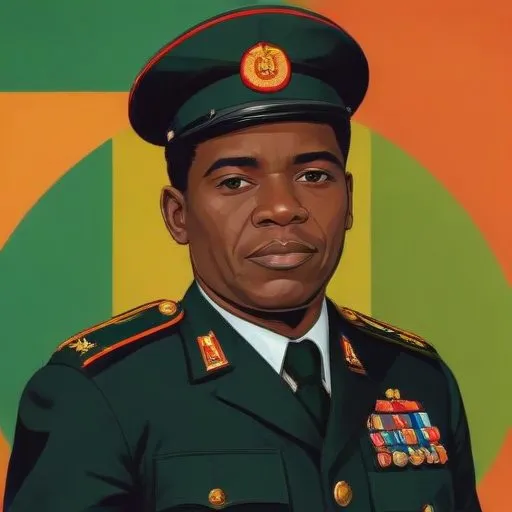
The first Vice President of Zambia, a key figure in the country's struggle for independence and early government, known for his military and political leadership.
Reuben Chitandika Kamanga, a stalwart figure in Zambia's journey to independence, is revered for his unwavering dedication to the country's liberation from colonial rule. As a freedom fighter, politician, and statesman, Kamanga played a pivotal role in shaping Zambia's destiny, earning him a permanent place in the nation's history.
Born on August 26, 1929, in Chitandika village, Chipata district, Eastern Zambia, Kamanga's early life was marked by a thirst for knowledge. He pursued his secondary education at Munali Secondary School, laying the foundation for his future endeavors.
Kamanga's involvement in the independence struggle began in the late 1950s, during which he was imprisoned several times for his activism. Despite these setbacks, he continued to fight for Zambia's freedom, joining the United National Independence Party (UNIP) in 1958 alongside other prominent figures from the Eastern Province.
Kamanga's unwavering commitment to the independence movement earned him a key position as the deputy president of UNIP. Following Zambia's independence on October 24, 1964, he was appointed the country's first Vice President under President Kenneth Kaunda, serving in this capacity for three years.
Kamanga's political career was marked by various cabinet positions, including Minister of Labour and Mines, Minister of Foreign Affairs, and Minister of Rural Development. He also served as a Member of the Central Committee in charge of Rural Development and Legal and Political Affairs.
In 1990, Kamanga retired from politics, opting not to contest the Movement for Multi-Party Democracy (MMD) in the 1991 elections. He passed away on September 20, 1996, at his Makeni home, leaving behind a legacy that continues to inspire generations of Zambians.
In 2014, the extended Kamanga family petitioned the Zambian government to rename the Chipata District hospital after Reuben Kamanga, a testament to his enduring impact on Zambia's struggle for independence.
In conclusion, Reuben Chitandika Kamanga's life was a testament to his unwavering commitment to Zambia's liberation and development. His legacy serves as a beacon of inspiration, reminding us of the power of perseverance and dedication to the noble causes of freedom and justice.
Born in 1924
First president of Zambia, leading the country to independence from British colonial rule and advocating for African unity and development.
83 Years Old
The second President of Zambia, who served from 1991 to 2002, is known for introducing multiparty democracy and overseeing the country's transition from a one-party state. He's also infamous for corruption and embezzlement allegations.
78 Years Old
A Zambian lawyer and politician who served as the 3rd President of Zambia, known for his efforts to combat corruption and promote economic development in his country. He was a key figure in shaping Zambia's modern political landscape.
89 Years Old
A Zambian police officer-turned-politician who served as the 5th President of Zambia, known for his populist policies and anti-Chinese rhetoric. He's remembered for his efforts to increase the country's economic independence.
