


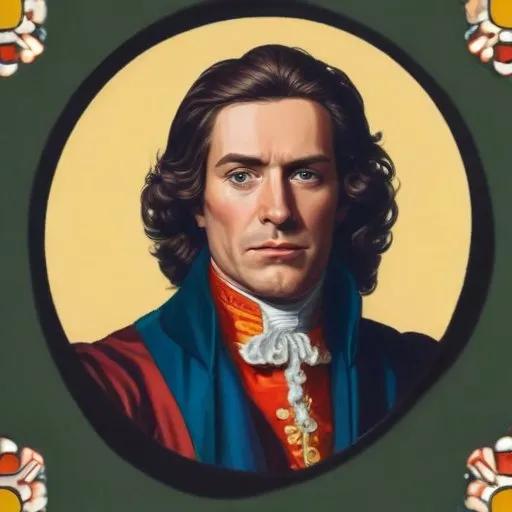
A 17th-century Anglo-Irish nobleman who served as Lord High Treasurer of Ireland and supported the Royalist cause during the English Civil War, known for his architectural patronage and Whig politics.
Richard Boyle, 1st Earl of Burlington, is renowned for his dual roles as a prominent Anglo-Irish nobleman and Lord High Treasurer of Ireland, as well as a devoted Cavalier who fought valiantly in the English Civil War. His remarkable life, marked by both triumph and defeat, is a testament to the complexities of 17th-century politics and the enduring legacy of a true aristocrat.
Born on October 20, 1612, at The College in Youghal, County Cork, Ireland, Richard Boyle was the sixth child and second son of Richard Boyle, 1st Earl of Cork, and his second wife, Catherine Fenton. His siblings included the esteemed chemist Robert Boyle and the influential Lady Ranelagh.
In 1624, at the tender age of 12, Richard Boyle was knighted by Lord Falkland at his father's residence in Youghal. As the Hon. Sir Richard Boyle, he embarked on a grand tour of Europe, accompanied by an annual allowance of £1,500. This formative experience imbued him with a sense of refinement, cultural sophistication, and a deep understanding of European politics.
As the English Civil War erupted in 1642, Sir Richard Boyle demonstrated unwavering loyalty to the Royalist cause, supplying King Charles I with £5,553 and mustering 100 horses to aid in the monarch's expedition against the Scots. Later, as a member of the Privy Council of England, he was excluded due to his Royalist sympathies.
His military prowess shone at the Battle of Liscarroll on September 3, 1642, where he, alongside Lord Inchiquin, led the forces that defeated the Irish irregular army, securing a crucial victory for the Protestant interest in southern Ireland.
The Commonwealth fined Sir Richard Boyle £1,631 sterling, a hefty sum, for his Royalist allegiance. Despite this setback, he continued to serve the monarchy, eventually being created Earl of Burlington in 1664. His later years were marked by a return to Ireland, where he resumed his role as Lord High Treasurer.
A testament to his lasting impact on Irish politics and society, Richard Boyle, 1st Earl of Burlington, left behind a legacy of refinement, diplomacy, and steadfast commitment to the Crown. His remarkable life, marked by both triumph and adversity, serves as a poignant reminder of the complexities of 17th-century politics and the enduring power of aristocratic influence.
This intriguing figure, whose life intertwined politics, war, and aristocracy, continues to fascinate historians and enthusiasts alike. As we reflect upon his remarkable journey, we are reminded of the profound impact Richard Boyle, 1st Earl of Burlington, had on the course of Irish and English history.
Born in 1676
The first Prime Minister of the United Kingdom, serving from 1721 to 1742, known for establishing the office of Prime Minister and setting important precedents for the role. He is also recognized for his skill in managing Parliament and his role in shaping British politics.
Born in 1694
The Prime Minister who led Britain through a period of relative peace and stability, and is often credited with being the first Prime Minister in the modern sense, holding office from 1743 to 1754.
55 Years Old
Australian rules football legend who played 137 games and coached three teams, including the Melbourne Football Club, leading them to a premiership in 1964.
