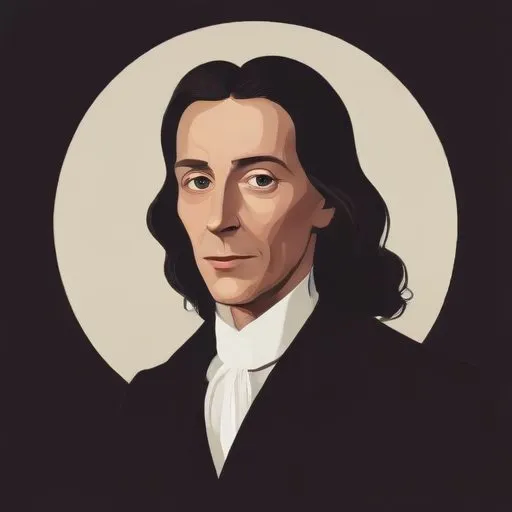
Robert Boyle: The Father of Modern Chemistry
A Pioneer of Science and Philosophy
Robert Boyle is renowned for his groundbreaking contributions to the fields of chemistry, physics, and natural philosophy. He is best known for Boyle's Law, a fundamental principle that describes the inverse relationship between the pressure and volume of a gas, which has had a profound impact on our understanding of the natural world.
Early Life and Education
Born on January 25, 1627, at Lismore Castle in County Waterford, Ireland, Boyle was the seventh son and fourteenth child of The 1st Earl of Cork, Richard Boyle, and Catherine Fenton. His father, a prominent figure in Irish politics, had amassed significant wealth and landholdings, and was created Earl of Cork in 1620. Boyle's early education consisted of private tutoring in Latin, Greek, and French, before being sent to Eton College in England at the age of eight. Here, he was exposed to a wide range of intellectual pursuits, including mathematics, astronomy, and philosophy.
Career Highlights and Major Works
Boyle's most notable achievements include:
- The publication of New Experiments Physico-Mechanical, Touching the Spring of the Air in 1662, which outlined his groundbreaking work on the behavior of gases and laid the foundation for modern pneumatic chemistry.
- The publication of The Sceptical Chymist in 1661, a seminal work that challenged traditional alchemical theories and established the foundations of modern chemistry.
- The discovery of Boyle's Law, which was first published in 1662 and has since become a cornerstone of chemistry and physics.
Influence on Modern Society
Boyle's contributions to science have had a profound impact on modern society. His work on the behavior of gases has led to numerous breakthroughs in fields such as:
- Aerospace engineering: Boyle's Law has been crucial in the design of aircraft and spacecraft, enabling engineers to create more efficient and safe vehicles.
- Medical research: Boyle's work on the properties of gases has led to significant advances in medical research, particularly in the fields of respiratory medicine and anesthesia.
- Industrial processes: Boyle's discovery of the relationship between pressure and volume has enabled the development of more efficient industrial processes, such as pneumatic conveyors and pipelines.
Philosophical Contributions and Beliefs
Boyle was a devout Anglican and saw his work as a way to understand the natural world and the workings of God. He believed that science and theology were complementary pursuits, and that the study of nature could reveal the beauty and wisdom of God. His philosophical contributions include:
- The development of the concept of "corpuscularianism," which posits that matter is composed of tiny particles or "corpuscles" that interact with each other to form the natural world.
- The promotion of the idea of "mechanical philosophy," which aimed to explain natural phenomena through the principles of mechanics and motion.
Personal Milestones and Key Life Events
- In 1660, Boyle established the first chemical laboratory in Oxford, which became a hub for scientific inquiry and experimentation.
- In 1668, Boyle was elected as a Fellow of the Royal Society, a prestigious scientific organization that promoted the advancement of scientific knowledge.
- In 1691, Boyle died on December 31, at the age of 64, leaving behind a legacy of scientific discovery and intellectual inquiry.
Legacy and Impact on Chemistry
Robert Boyle's contributions to chemistry have been immeasurable. He is widely regarded as the "Father of Modern Chemistry" and has had a lasting impact on our understanding of the natural world. His work has inspired generations of scientists, from Isaac Newton to
Antoine Lavoisier, and continues to shape the course of scientific inquiry today.
FAQ
Who was Robert Boyle?
Robert Boyle was an Anglo-Irish chemist, physicist, and inventor who is widely regarded as the father of modern chemistry. He made significant contributions to the development of modern science, particularly in the fields of chemistry and physics.
What were Robert Boyles most important scientific contributions?
Robert Boyles most important scientific contributions include the formulation of Boyles Law, which describes the relationship between pressure and volume of gases, and his work on the development of modern chemistry, including the discovery of several elements and compounds.
What was Robert Boyles role in the scientific revolution?
Robert Boyle played a key role in the scientific revolution of the 17th century, which saw the development of modern scientific methods and the emergence of new scientific disciplines such as chemistry and physics. He was a prominent figure in the Royal Society, a leading scientific organization of the time.
What was Robert Boyles educational background?
Robert Boyle was educated at Eton College and Trinity College, Oxford, where he studied philosophy and theology. He also traveled extensively throughout Europe, where he learned about the latest scientific developments and met prominent scientists of the time.
What is Robert Boyles legacy?
Robert Boyles legacy is that of a pioneering scientist who made significant contributions to the development of modern chemistry and physics. His work laid the foundation for later scientific discoveries and he is remembered as one of the most important scientists of the 17th century.