


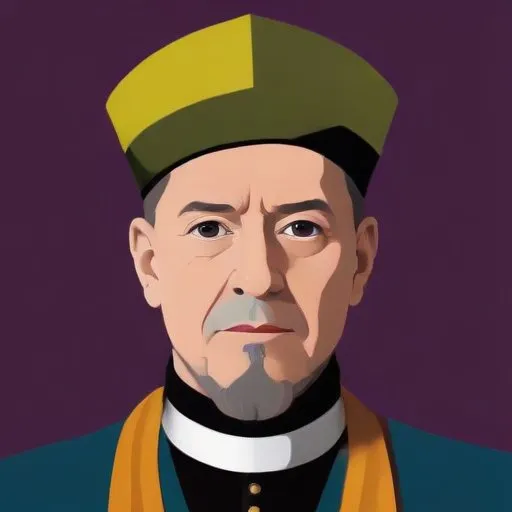
A 18th-century bishop who wrote influential literary criticism and was a key figure in the English Romantic movement, shaping the way people understood and appreciated poetry and literature.
Richard Hurd, a distinguished English divine and writer, is best known for his remarkable contributions to the fields of theology, literature, and education. As a prominent figure in the 18th century, Hurd left an indelible mark on the intellectual and cultural landscape of his time.
Born on January 13, 1720, in Congreve, Staffordshire, Hurd was the son of a farmer. He received his early education at Brewood Grammar School and later attended Emmanuel College, Cambridge, where he earned his B.A. degree in 1739 and M.A. degree in 1742.
Hurd's academic prowess and literary talents soon earned him recognition. In 1748, he published Remarks on an Enquiry into the Rejection of Christian Miracles by the Heathens, a response to William Weston's work. This led to a lasting friendship with William Warburton, a prominent literary figure of the time.
Hurd's editions of Horace's Ars Poetica and Epistola ad Pisones (1749) and Epistola ad Augustum (1751) received high praise from the esteemed historian Edward Gibbon. His literary achievements paved the way for his appointment as one of the preachers at Whitehall in 1750.
Hurd's ecclesiastical career progressed rapidly. He became preacher at Lincolns Inn in 1765 and archdeacon of Gloucester in 1767. In 1768, he earned his D.D. from Cambridge and delivered the inaugural Warburton lectures, later published as An Introduction to the Study of the Prophecies concerning the Christian Church (1772).
In 1774, Hurd was consecrated bishop of Lichfield and Coventry, and two years later, he became tutor to the prince of Wales and the duke of York. In 1781, he was translated to the see of Worcester and made Clerk of the Closet, a position he held until his death.
Hurd's popularity at court was evident when, in 1783, King George III pressed him to accept the primacy, a position he declined. During his lifetime, Hurd built a remarkable library at Hartlebury Castle, which housed books from Alexander Pope and William Warburton's collections.
Richard Hurd's contributions to theology, literature, and education have left an enduring legacy. His works continue to inspire scholars and intellectuals, and his influence on modern society is still felt today.
Richard Hurd's remarkable life and achievements serve as a testament to his dedication to scholarship, faith, and education. His legacy continues to inspire and educate generations, solidifying his place as a celebrated English divine and writer.
Born in 1698
A 17th-century bishop who advocated for the importance of reason in religion and wrote extensively on literature and theology. He's known for his critical editions of Shakespeare's plays.
Born in 1643
A Scottish bishop, historian, and theologian who wrote influential works on the English Reformation and served as a close advisor to King William III. He's most known for his historical writings and ecclesiastical reforms.
Born in 1635
A 17th-century theologian and scholar who wrote extensively on biblical criticism and ecclesiastical history, influencing the development of Anglican theology.
Born in 1632
A 17th-century thinker who laid the groundwork for modern democracy, arguing that governments derive their power from the people and that individuals have inherent rights to life, liberty, and property.
Born in 1675
A 17th-century Anglican clergyman and philosopher who advocated for rational theology and the existence of God, influencing Enlightenment thinkers like Isaac Newton. He's also known for his debates on the nature of space and time.
