


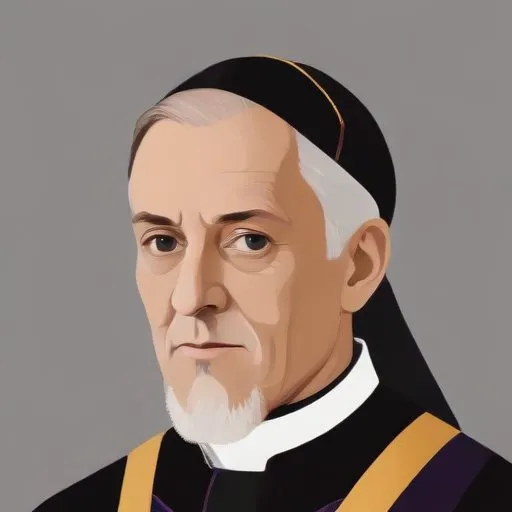
A 17th-century bishop who advocated for the importance of reason in religion and wrote extensively on literature and theology. He's known for his critical editions of Shakespeare's plays.
William Warburton, a prominent English writer, literary critic, and churchman, is best known for his meticulous editing of the works of Alexander Pope and William Shakespeare, as well as his tenure as the Bishop of Gloucester from 1759 until his death in 1779. His dedication to preserving literary masterpieces and his influential role in the Church of England cemented his place in the annals of history.
Born on December 24, 1698, in Newark, Nottinghamshire, Warburton was the son of George Warburton, the town clerk. He received his early education at Oakham and Newark grammar schools, before being articled to Mr. Kirke, an attorney, at East Markham in 1714. However, his passion for Latin and Greek led him to pursue a career in the church, and he was ordained as a deacon in 1723 and a priest in 1726.
Warburton's association with literary circles in London began in 1726, where he befriended notable figures such as Alexander Pope and Sir Robert Sutton. Sutton's patronage secured Warburton the living of Greasley, Nottinghamshire, and later, Brant Broughton in Lincolnshire. In 1728, he was awarded an honorary M.A. from the University of Cambridge, further solidifying his reputation as a scholar.
Warburton's treatise, "The Alliance between Church and State" (1736), was a seminal work that brought him to the attention of the royal court. His defense of Pope's writings against charges of religious unorthodoxy led to a lasting friendship with the poet, which greatly advanced Warburton's social standing. He went on to edit Pope's works, as well as those of William Shakespeare, earning him recognition as a meticulous and authoritative editor.
In 1759, Warburton's literary and ecclesiastical achievements culminated in his appointment as the Bishop of Gloucester, a position he held until his death in 1779. This appointment was largely due to the influence of Ralph Allen, who had gifted Warburton his niece, Gertrude Tucker, in marriage, as well as his estate, Prior Park.
William Warburton's contributions to literature, the church, and education have left an indelible mark on history. His dedication to preserving the works of literary giants and his commitment to the Church of England have inspired generations of scholars and clergy. Today, Warburton is remembered as a luminary of the 18th century, whose influence continues to resonate in the literary and ecclesiastical circles he once inhabited.
Born in 1667
A witty wordsmith who penned scathing social commentaries, including the iconic "Gulliver's Travels", which continue to delight and provoke readers to this day.
Born in 1846
A Nigerian priest and historian who wrote the first comprehensive history of the Yoruba people, providing valuable insights into their culture and traditions.
Born in 1737
Wrote "The History of the Decline and Fall of the Roman Empire", a monumental work that shaped the field of historiography and remains a classic in the study of ancient civilizations.
Born in 1713
Wrote influential and innovative novels, particularly "Tristram Shandy", that experimented with narrative structure and style, influencing the development of modern literature.
Born in 1707
Wrote influential and satirical novels of manners, such as "Tom Jones", that explored the social and moral issues of 18th-century England.
Born in 1672
A pioneering journalist and playwright who co-founded The Tatler and The Spectator, influential publications that shaped 18th-century British literature and culture.
Born in 1672
A renowned 18th-century writer and statesman who penned influential essays and plays, shaping English literature and politics. He's most famous for his witty, insightful writings in The Spectator magazine.
Born in 1728
A celebrated 18th-century writer, known for his witty plays and novels of manners that satirized the social class system, leaving a lasting impact on English literature.
