


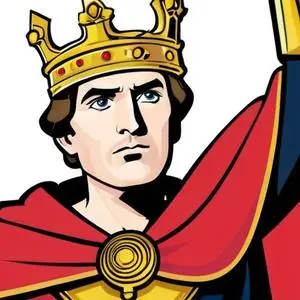
The King of England who led the Third Crusade and was known for his military prowess and chivalry, earning him the nickname "Lionheart".
Known as Richard the Lionheart, this fearless monarch is renowned for his exceptional military prowess and unwavering dedication to the Third Crusade. As King of England from 1189 to 1199, Richard I left an indelible mark on history, solidifying his place as one of the most iconic figures of the Middle Ages.
Born on September 8, 1157, Richard was the third of five sons to Henry II of England and Eleanor of Aquitaine. Despite being unlikely to ascend to the throne, Richard's two elder brothers predeceased their father, paving the way for his eventual coronation.
By the age of 16, Richard had already demonstrated his military acumen, successfully quelling rebellions in Poitou against his father. This early display of leadership foreshadowed his future triumphs as a seasoned commander.
Richard's most notable achievement was his participation in the Third Crusade, a holy war aimed at reclaiming Jerusalem from Muslim forces. He joined the campaign in 1190, following the departure of Philip II of France, and led the charge against the legendary Muslim leader, Saladin.
Despite facing numerous challenges, Richard secured several victories, showcasing his tactical genius and unwavering commitment to the cause. Although he ultimately failed to retake Jerusalem, his military prowess earned him the respect of his enemies and the admiration of his contemporaries.
Richard's reign as King of England was marked by prolonged absences, as he devoted most of his time to military campaigns and defending his lands in France. He spent a remarkable six months or less in England during his entire reign, instead relying on his kingdom as a source of revenue to support his armies.
Despite this, Richard was revered by his subjects as a pious hero, and his legacy endured long after his death. His status as a legendary figure was further cemented by his epithet, "The Lionheart," which has become synonymous with bravery and chivalry.
Richard's linguistic abilities were impressive, with fluency in both French and Occitan. He was born in England but spent most of his adult life in the Duchy of Aquitaine, in southwest France.
Richard's legacy extends beyond the realm of politics and warfare. He remains an iconic figure in both England and France, with his name evoking images of courage, honor, and unwavering dedication to one's convictions.
Richard I's influence on modern society is multifaceted. His unwavering commitment to the Crusade has inspired countless stories, poems, and works of art throughout history. His legacy has also shaped the way we perceive courage, honor, and leadership.
As one of the most iconic figures of the Middle Ages, Richard I's impact on popular culture is undeniable. He has been immortalized in literature, film, and art, ensuring his place in the pantheon of legendary heroes.
Richard I's remarkable story serves as a testament to the power of courage, determination, and unwavering conviction. His legacy continues to inspire generations, cementing his place as one of the most iconic figures in history.
Born in 1052
King of France from 1060 to 1108, known for his military campaigns and conflicts with the Church, particularly his excommunication by Pope Urban II.
Born in 1133
King of England from 1154 to 1189, known for establishing a strong centralized government, reforming the English church, and his tumultuous relationships with Thomas Becket and his sons.
