


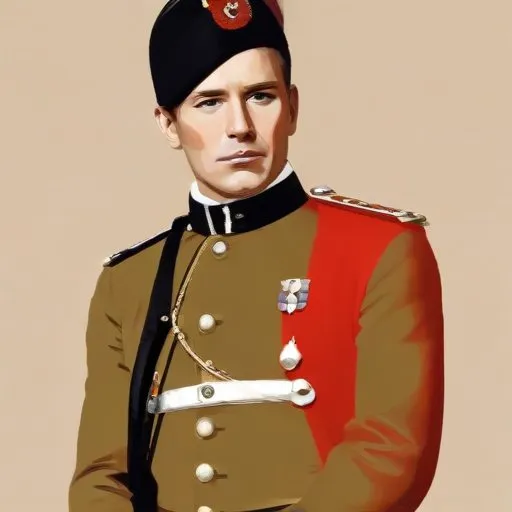
A 17th-century military leader and Member of Parliament, known for his role in the English Civil War and his advocacy for the rights of the common people.
Richard Wainwright, a British politician, was a stalwart of the Liberal Party, serving as the Member of Parliament (MP) for Colne Valley from 1966 to 1970 and again from 1974 to 1987. Throughout his political career, he was a passionate advocate for liberal values, focusing on employment, trade, and public finance.
Born in Leeds on April 11, 1918, Wainwright was educated at Shrewsbury School and later won an open scholarship to Clare College, Cambridge, where he graduated with a BA in History in 1938. During his time at Cambridge, he developed a strong interest in the Liberal Party, becoming an active member of the Cambridge University Liberal Club.
After graduating, Wainwright became a merchant banker, but his passion for politics soon led him to focus on his political aspirations. During World War II, he registered as a conscientious objector and joined the Friends Ambulance Unit, a Quaker organization, serving in Normandy in 1944, and Antwerp, the Netherlands, and Germany in 1944-1946.
Wainwright's parliamentary career began when he stood as the Liberal Party candidate for the constituency of Pudsey in the general election of 1950 and again in 1955, although he was unsuccessful on both occasions. Undeterred, he became the Liberal candidate for Colne Valley in 1956 and went on to win the seat in 1966, a victory he repeated in 1974 after a brief period out of office.
Throughout his time in parliament, Wainwright was a strong advocate for liberal values, serving as the chairman of the Liberal Party between 1970 and 1972. His areas of expertise included employment, trade, and public finance, and he was a central spokesman for the Liberal Party on finance, trade, and industry.
Wainwright's dedication to the Liberal Party and its values has left a lasting impact on British politics. His commitment to liberal principles and his tireless work on behalf of his constituents have made him a respected figure in the world of politics.
Throughout his career, Wainwright was known for his wit and wisdom. One of his most memorable quotes is: "Politics is not about winning or losing, it's about standing up for what you believe in."
Wainwright's legacy extends beyond his political career, inspiring generations of liberal politicians and activists. His commitment to liberal values and his tireless work on behalf of his constituents have made a lasting impact on British politics and society.
Born in 1871
Prolific writer of historical novels and adventure stories, also a talented landscape painter.
Born in 1883
Led the Labour Party to a landslide victory in 1945, implementing significant social and economic reforms, including the creation of the National Health Service. He played a crucial role in shaping post-war Britain.
Born in 1897
A British politician who served as Prime Minister from 1955 to 1957, known for his role in the Suez Crisis and his diplomatic efforts during the Cold War.
Born in 1894
A British politician who served as Prime Minister from 1957 to 1963, known for leading the country through a period of economic prosperity and decolonization.
Born in 1903
A British aristocrat who served as Prime Minister from 1963 to 1964, known for his brief tenure and aristocratic background.
Born in 1885
Won the 1952 Olympic Games marathon in Helsinki, Finland, and held the world record in the marathon from 1952 to 1953.
Born in 1916
The Prime Minister who led the UK into the European Economic Community (EEC) and navigated the country through a period of economic and industrial turmoil. He's also known for his diplomatic efforts, particularly in regards to the Cold War.
Born in 1912
A British politician who served as Prime Minister from 1976 to 1979, known for his efforts to stabilize the economy and navigate the country through a period of industrial unrest.
