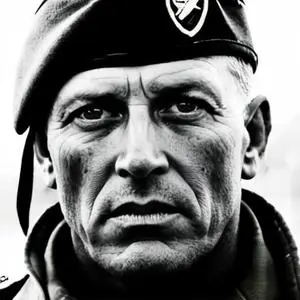
Richard Winters: The Hero of Easy Company
A Leader of Men in the Face of War
Richard Winters is best known for his courageous leadership as a paratrooper in Easy Company of the 506th Infantry Regiment within the 101st Airborne Division during World War II. His remarkable story of bravery and sacrifice has been immortalized in numerous books and the acclaimed 2001 HBO miniseries Band of Brothers, where he was portrayed by actor Damian Lewis.
A Humble Beginning
Born on January 21, 1918, in New Holland, Pennsylvania, Winters grew up in nearby Ephrata and Lancaster. He graduated from Lancaster Boys High School in 1937 and went on to attend Franklin and Marshall College, where he earned a B.S. in Economics in 1941. At college, he was an active member of the Upsilon chapter of Delta Sigma Phi fraternity and participated in intramural football and basketball.
The Call to Duty
On August 25, 1941, Winters enlisted in the Army, driven by a sense of duty rather than a desire for war. He underwent basic training at Camp Croft, South Carolina, and later attended Officer Candidate School (OCS) at Fort Benning, Georgia, where he forged lasting bonds with fellow future leaders, including
Lewis Nixon.
Leading Easy Company to Victory
Winters' military career was marked by extraordinary valor and strategic brilliance. During the D-Day invasion of Normandy, he led his men in the assault on Brecourt Manor, a pivotal mission that secured a crucial road junction and paved the way for the Allied advance. For his bravery, Winters was awarded the Distinguished Service Cross, the second-highest honor in the U.S. military.
A Legacy of Leadership
Winters' leadership style was characterized by his emphasis on teamwork, discipline, and compassion. He inspired loyalty and admiration in his men, who credited him with their survival in the face of overwhelming odds. Through his remarkable story, Winters has left an indelible mark on American military history and continues to inspire generations of soldiers and civilians alike.
Personal Life and Later Years
After the war, Winters returned to Pennsylvania, where he worked in the agricultural industry and later founded his own business. He remained humble and private, never seeking to draw attention to himself, even as his story became the subject of numerous books and films. Winters passed away on January 2, 2011, at the age of 92, leaving behind a legacy of courage, leadership, and service.
Quotes and Memorable Sayings
- "There's a time to lead and a time to follow. You gotta know when to do which."
- "The biggest mistake in combat is to underestimate the enemy. Assume they're better than you, and you'll be right."
Influence on Modern Society
Richard Winters' story has had a profound impact on modern society, serving as a reminder of the importance of leadership, teamwork, and sacrifice. His legacy has inspired numerous books, films, and documentaries, ensuring that his remarkable story continues to captivate and motivate people around the world.
FAQ
What is Richard Winterss most notable achievement in World War II?
Richard Winterss most notable achievement in World War II is his leadership of Easy Company, 2nd Battalion, 506th Parachute Infantry Regiment, 101st Airborne Division, during the invasion of Normandy and subsequent campaigns.
What was Richard Winterss role in the D-Day invasion?
Richard Winters played a crucial role in the D-Day invasion, leading his company in the assault on Brecourt Manor and subsequent battles in Normandy.
How did Richard Winterss leadership impact the success of Easy Company?
Richard Winterss leadership and tactical skills were instrumental in the success of Easy Company, which became one of the most respected and effective units in the 101st Airborne Division.
What honors did Richard Winters receive for his service in World War II?
Richard Winters received numerous honors for his service in World War II, including the Distinguished Service Cross, the Bronze Star, and the Purple Heart.
What is Richard Winterss legacy in American military history?
Richard Winterss legacy in American military history is one of courage, leadership, and sacrifice, serving as an inspiration to future generations of military personnel and civilians alike.