


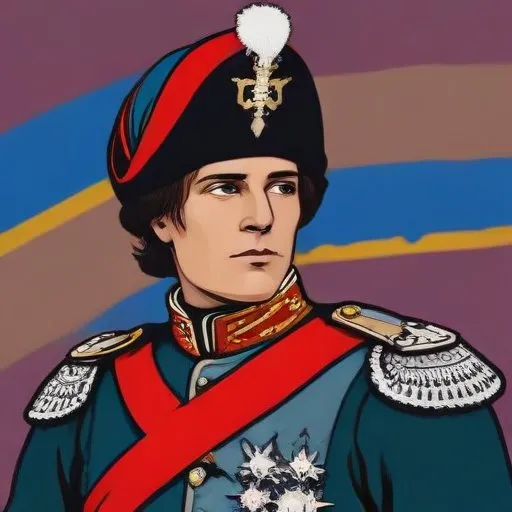
A powerful nobleman and skilled military leader who played a significant role in the Second Barons' War against King Henry III of England. He was a key figure in the establishment of the English parliamentary system.
Richard de Clare, 6th Earl of Gloucester, was a prominent noblemen in 13th century England, known for his significant influence in shaping the country's constitutional crisis of 1258-1263 and his role as a powerful Marcher Lord in Wales. Through his strategic marriages, military alliances, and guardianships, he left an indelible mark on the medieval English landscape.
Born on August 4, 1222, Richard de Clare inherited the title of Earl of Gloucester upon the death of his father, Gilbert de Clare, in 1230. As a minor, he was entrusted to the guardianship of Hubert de Burgh, and later to Peter des Roches and Gilbert, Earl Marshal.
Richard's first marriage to Margaret or Megotta, the daughter of Hubert de Burgh, ended in either annulment or her death in 1237. He then married Maud de Lacy, daughter of John de Lacy, 1st Earl of Lincoln, in 1238. This strategic marriage solidified his position as a powerful nobleman.
Richard joined the Barons' letter to the Pope in 1246, opposing the exactions of the Curia in England. He initially opposed the King's half-brothers, but later reconciled with them. In 1253, he refused to accompany King Henry III to Gascony, choosing instead to visit Ireland.
During the constitutional crisis of 1258-1263, Richard played a crucial role, leveraging his influence as a powerful Marcher Lord to shape the outcome. His actions during this period cemented his position as a key figure in medieval English politics.
Richard de Clare's legacy extends beyond his military and political achievements. He played a significant role in shaping the course of English history, particularly during the tumultuous years of the mid-13th century. His strategic alliances, marriages, and guardianships positioned him as a powerful actor in the medieval English landscape.
Through his life and actions, Richard de Clare demonstrated the complexities of medieval politics, where allegiances were forged and broken, and power was constantly negotiated. His story serves as a testament to the intricate web of relationships that defined the medieval English nobility.
While Richard de Clare's specific actions may not have a direct impact on modern society, his legacy as a powerful Marcher Lord and his role in shaping the constitutional crisis of 1258-1263 continue to influence our understanding of medieval English politics. His story serves as a reminder of the complexities of power, allegiance, and negotiation that have shaped human societies throughout history.
Born in 1133
King of England from 1154 to 1189, known for establishing a strong centralized government, reforming the English church, and his tumultuous relationships with Thomas Becket and his sons.
Born in 1284
The king whose disastrous reign led to his eventual deposition and mysterious death, remembered for his alleged homosexual relationships and power struggles with nobles.
Born in 1284
The king whose disastrous reign led to his eventual deposition and mysterious death, remembered for his alleged homosexual relationships and power struggles with nobles.
Born in 1274
Led Scotland during the First War of Scottish Independence, ultimately securing a decisive victory at the Battle of Bannockburn and earning recognition as the country's rightful king. He's celebrated for his bravery, strategic thinking, and unwavering commitment to Scottish freedom.
