


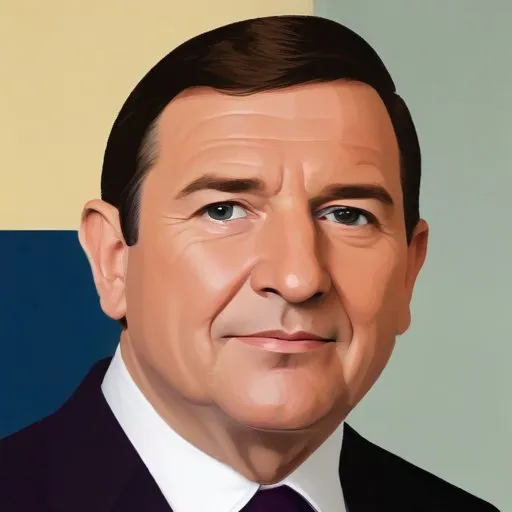
The 43rd Premier of South Australia, serving from 2001 to 2002, known for his efforts to revitalize the state's economy and reform its public sector. He's also remembered for his leadership during the 2002 South Australian blackout.
Rob Kerin, a stalwart of South Australian politics, is best known for his brief but eventful stint as the Premier of South Australia from 2001 to 2002. As the leader of the Liberal Party of Australia's South Australian division, Kerin's premiership was marked by unexpected twists and turns that would shape the state's political landscape.
Born on January 4, 1954, in Crystal Brook, South Australia, Kerin was raised by parents Maurice and Molly Kerin. He attended Sacred Heart College Senior, a Catholic secondary school in Adelaide, where he laid the foundation for his future in politics.
Kerin's entry into politics came in 1993, when he was elected to the South Australian Parliament as the member for the rural electoral district of Frome. Over the next eight years, he held various ministerial portfolios, including Primary Industries, Natural Resources and Regional Development, Minerals and Energy, State Development, Tourism, and Multicultural Affairs.
In 1998, following the resignation of Deputy Premier Graham Ingerson, Kerin succeeded him, setting the stage for his eventual rise to the premiership.
In 2001, Premier John Olsen was forced to resign after misleading parliament, an event that would come to be known as the Motorola affair. Kerin saw an opportunity and narrowly defeated former Premier Dean Brown to become the Liberal leader and premier.
Although Kerin's premiership was short-lived, he faced significant challenges, including navigating a hung parliament and dealing with the aftermath of the Motorola affair. Despite these obstacles, he remained committed to his vision for South Australia.
Kerin's time in office may have been brief, but his impact on South Australian politics was significant. He played a crucial role in shaping the state's economic and environmental policies, and his leadership during a period of political turmoil earned him respect from his peers.
Although Kerin's premiership was marked by controversy, his commitment to public service and his dedication to the people of South Australia remain unwavering. Today, he is remembered as a statesman who navigated treacherous political waters with integrity and determination.
Outside of politics, Kerin is a devoted family man. He has been married to his wife, Deborah, for many years, and they have three children together.
Kerin's personal milestones include his election as the member for Frome, his appointment as Deputy Premier, and his eventual rise to the premiership. These achievements are a testament to his hard work and dedication to public service.
Kerin's political philosophy is rooted in a strong belief in the importance of regional development and the need for sustainable economic growth. Throughout his career, he has advocated for policies that promote job creation, environmental protection, and social justice.
As a Liberal, Kerin's political ideology is centered on individual freedom, limited government intervention, and economic liberalism. However, his commitment to social welfare and environmental protection has earned him a reputation as a pragmatic and socially conscious leader.
Kerin's impact on modern society extends beyond his political career. As a respected community leader, he has contributed to various charitable organizations and community groups, working tirelessly to improve the lives of South Australians.
Through his work in politics and beyond, Kerin has inspired generations of young Australians to become involved in public service and community activism. His legacy continues to inspire and motivate individuals to make a positive difference in their communities.
Kerin's premiership was marked by controversy, particularly surrounding the Motorola affair. However, he has consistently maintained that his actions were motivated by a desire to serve the people of South Australia, rather than personal gain.
Despite the controversies, Kerin remains a respected figure in South Australian politics, known for his integrity and commitment to public service.
"My goal has always been to make a positive difference in the lives of South Australians. I have worked tirelessly to deliver on my promises and to protect the interests of our great state."
"As leaders, we have a responsibility to serve the people, not ourselves. It is a sacred trust that I have always taken seriously."
Kerin's premiership took place during a tumultuous period in South Australian politics, marked by scandals, leadership challenges, and factionalism. Despite these challenges, he remained focused on his vision for the state and worked to restore stability and confidence in the government.
Today, Kerin's legacy is one of resilience, determination, and a commitment to public service. His time in office may have been short, but his impact on South Australian politics will be felt for generations to come.
73 Years Old
A journalist-turned-politician who served as the Premier of South Australia, known for his progressive policies and environmental initiatives. He played a key role in shaping the state's economy and infrastructure.
57 Years Old
American swimmer who won three gold medals and set multiple world records in the 1990s, earning him the title of World Swimmer of the Year in 1992.
83 Years Old
The 41st Premier of South Australia, serving from 1996 to 2002, known for his economic reforms and leadership during a period of significant change in the state. He played a crucial role in shaping South Australia's economy and development.
83 Years Old
The 39th Premier of South Australia, a prominent academic and politician who played a significant role in shaping the state's education and economic policies. He's most known for his efforts to revitalize the state's economy and improve its education system.
99 Years Old
A pioneering figure in Australian politics, known for championing social justice, Aboriginal rights, and LGBTQ+ equality, leaving a lasting legacy in South Australia's progressive reforms.
97 Years Old
The 37th Premier of South Australia, serving from 1979 to 1982, known for his economic reforms and leadership during a period of significant change in the state. He played a crucial role in shaping South Australia's economy and politics.
Born in 1917
A Nobel Prize-winning chemist who pioneered stereochemistry research, making significant contributions to our understanding of molecular structures and their interactions.
