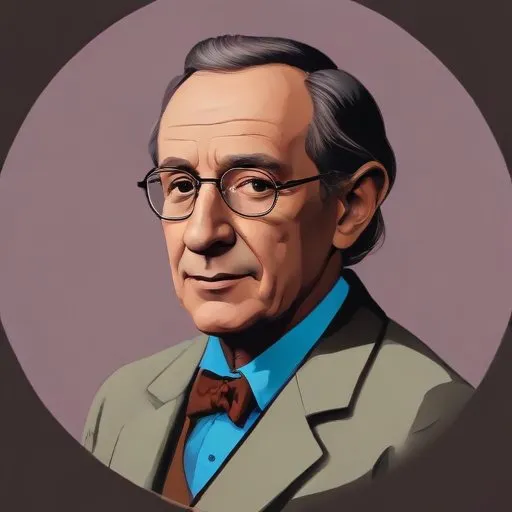
Robert Bacher: The Visionary Nuclear Physicist Behind the Manhattan Project
A Pioneer in Nuclear Physics
Robert Fox Bacher was a renowned American nuclear physicist who played a pivotal role in the development of the atomic bomb during World War II. As one of the leaders of the Manhattan Project, Bacher's groundbreaking research and administrative prowess contributed significantly to the success of the project.
Early Life and Education
Born on August 31, 1905, in Loudonville, Ohio, Bacher obtained his undergraduate degree and doctorate from the University of Michigan. His 1930 doctoral thesis, supervised by Samuel Goudsmit, focused on the Zeeman effect of the hyperfine structure of atomic levels.
Academic Career and Collaborations
After completing his graduate work at the California Institute of Technology (Caltech) and the Massachusetts Institute of Technology (MIT), Bacher accepted a job at Columbia University. In 1935, he joined
Hans Bethe at Cornell University, where they collaborated on the seminal work "Nuclear Physics. A Stationary States of Nuclei" (1936), the first of three books that would become known as the "Bethe Bible."
The Manhattan Project and Los Alamos
In December 1940, Bacher joined the Radiation Laboratory at MIT, where he gained valuable experience in administration. In 1942, he was approached by Robert Oppenheimer to join the Manhattan Project at its new laboratory in Los Alamos, New Mexico. It was at Bacher's insistence that Los Alamos became a civilian rather than a military laboratory. At Los Alamos, Bacher headed the project's P Physics Division and later its G Gadget Division, working closely with Oppenheimer to oversee the project's progress.
Post-War Career and Legacy
After the war, Bacher became the director of the Laboratory of Nuclear Studies at Cornell. He also served on the U.S. Atomic Energy Commission, the civilian agency that replaced the wartime Manhattan Project. Bacher's contributions to nuclear physics and his leadership during the Manhattan Project have had a lasting impact on the field, earning him a place among the most influential scientists of the 20th century.
Awards and Honors
- Member of the National Academy of Sciences (1947)
- Fellow of the American Physical Society (1948)
- Recipient of the Enrico Fermi Award (1965)
Influence on Modern Society
Bacher's work on the Manhattan Project and his subsequent contributions to nuclear physics have had far-reaching implications for modern society. From the development of nuclear energy to advancements in medical imaging and cancer treatment, Bacher's legacy continues to shape the world we live in today.
Personal Milestones and Key Life Events
- August 31, 1905: Born in Loudonville, Ohio
- 1930: Awarded Ph.D. from the University of Michigan
- 1935: Joined Hans Bethe at Cornell University
- 1942: Joined the Manhattan Project at Los Alamos
- November 18, 2004: Passed away at the age of 99
Bacher's remarkable life and career serve as a testament to his groundbreaking contributions to nuclear physics and his enduring impact on modern society.
FAQ
What were Robert Bachers contributions to the Manhattan Project?
Robert Bacher was a key figure in the Manhattan Project, leading the experimental physics division at the Los Alamos Laboratory. He made significant contributions to the development of the atomic bomb, including the design of the implosion trigger. Bachers work was instrumental in the successful testing of the first nuclear weapon in 1945.
What academic positions did Robert Bacher hold?
Robert Bacher held various academic positions throughout his career, including professor of physics at Cornell University and chair of the physics department at California Institute of Technology (Caltech). He was also a member of the Science Advisory Committee to the President of the United States.
In what ways did Robert Bacher influence nuclear policy?
As a prominent physicist and advisor, Robert Bacher played a crucial role in shaping nuclear policy in the United States. He advocated for international cooperation and disarmament, serving as a delegate to the United Nations Atomic Energy Commission and advising the US government on nuclear matters.
What awards and honors did Robert Bacher receive?
Robert Bacher received numerous awards and honors for his contributions to physics and public service, including the Enrico Fermi Award, the Ernest O. Lawrence Award, and the Presidential Medal of Merit.
What was Robert Bachers role in the development of the electron microscope?
Robert Bacher contributed to the development of the electron microscope, a powerful tool for materials science and biology research. His work on the microscopes design and application led to significant advances in the field.