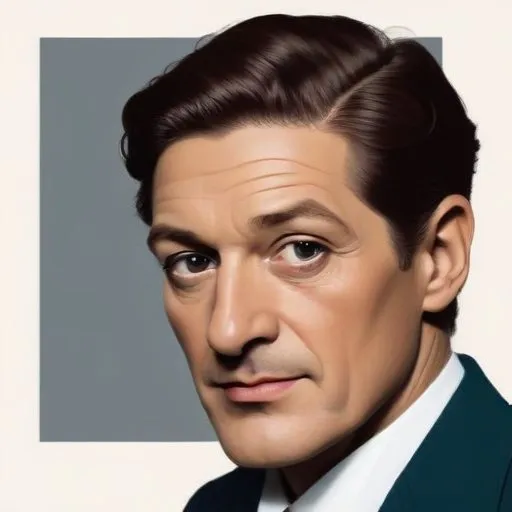
Robert Donat: The Romantic Leading Man of British Cinema
A Legendary Actor Remembered for His Iconic Roles
Robert Donat is best known for his captivating performances in
Alfred Hitchcock's
The 39 Steps (1935) and
Goodbye, Mr. Chips (1939), for which he won the Academy Award for Best Actor. These iconic roles cemented his status as British cinema's one undisputed romantic leading man in the 1930s.
Early Life and Career
Born on March 18, 1905, in Withington, Manchester, Donat was the youngest of four sons to Ernst Emil Donat, a civil engineer of German origin, and Rose Alice Green. With a rich cultural heritage, including English, Polish, German, and French ancestry, Donat was educated at Manchester Central Grammar School for Boys. His early life was marked by a struggle with a bad stammer, which he overcame through elocution lessons with
James Bernard, a renowned teacher of dramatic interpretation.
From Stage to Screen
Donat's first stage appearance was in 1921, at the age of 16, with Henry Bayntun's company at the Prince of Wales Theatre, Birmingham. He continued to hone his craft, joining the company of Shakespearean actor Sir Frank Benson in 1924, where he spent four years. His talent and dedication earned him a spot at the Liverpool Playhouse in 1928, followed by a year at the Festival Theatre in Cambridge under the direction of Tyrone Guthrie.
Awards and Accolades
- Academy Award for Best Actor for Goodbye, Mr. Chips (1939)
- Won the New York Film Critics Circle Award for Best Actor for Goodbye, Mr. Chips (1939)
Personal Life and Milestones
Donat married Ella Annesley Voysey in 1929, and the couple remained together until his passing in 1958. His struggles with chronic asthma affected his career, limiting him to just 19 films. Despite this, Donat left an indelible mark on British cinema, earning a reputation as a romantic idealist and gentleman adventurer.
Legacy and Impact
Donat's contributions to British cinema are still celebrated today. According to Jeffrey Richards, he was "British cinema's one undisputed romantic leading man in the 1930s." His iconic performances continue to inspire actors and filmmakers, and his legacy serves as a testament to his dedication to his craft.
Trivia and Fun Facts
- Donat's elder brother, Philip Donat, was the father of actors Richard and Peter Donat.
- He was a talented director, having directed several plays during his time at the Festival Theatre in Cambridge.
Conclusion
Robert Donat's remarkable career was marked by a passion for his craft, a dedication to overcoming personal struggles, and a commitment to leaving a lasting impact on British cinema. As we reflect on his life and legacy, we are reminded of the power of talent, perseverance, and hard work.
FAQ
What was Robert Donats most famous role?
Robert Donats most famous role is probably his iconic portrayal of Mr. Chips in the 1939 film Goodbye, Mr. Chips, for which he won the Academy Award for Best Actor.
What was Robert Donats acting style?
Robert Donats acting style was characterized by a naturalism, subtlety, and sensitivity that made him one of the most respected actors of his generation.
How did Robert Donats career evolve?
Robert Donats career evolved from early success on the stage to a successful film career, during which he appeared in over 20 films and won numerous awards and accolades.
What was Robert Donats approach to acting?
Robert Donats approach to acting was deeply rooted in his commitment to authenticity and honesty, which he believed were essential to creating believable and compelling performances.
How did Robert Donats life influence his acting?
Robert Donats life, which was marked by a series of challenges and setbacks, deeply influenced his acting, as he often drew on his experiences to inform his performances.