


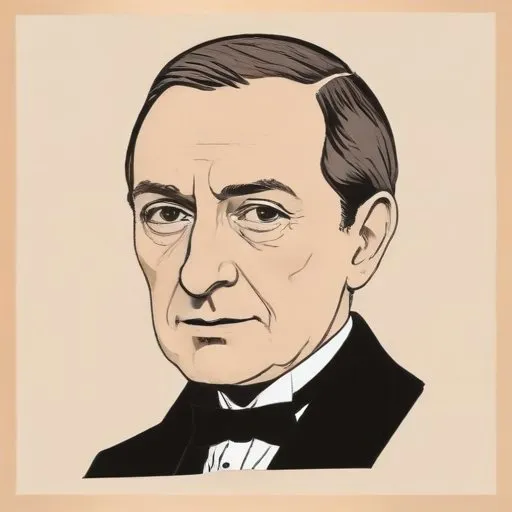
A British diplomat and public servant who played a key role in shaping the country's foreign policy and national security during the early 20th century, serving as a close advisor to several prime ministers.
Robert Hankey, 2nd Baron Hankey, was a British diplomat and public servant who made a lasting impact on international relations, serving as the Envoy to Hungary and Ambassador to Sweden, and later, as a delegate to the Organisation for Economic Cooperation and Development (OECD). He is also remembered for his stellar career in the House of Lords, where he spoke an impressive 552 times between 1965 and 1991.
Hankey was born on 4 July 1905, to Maurice Hankey, 1st Baron Hankey, and Adeline, daughter of Abraham de Smidt, of South Africa. He received his education at Rugby and New College, Oxford, laying the foundation for his future diplomatic endeavors.
Hankey's diplomatic career spanned several decades, during which he held various key positions. He was appointed as a Third Secretary in 1928, a Second Secretary in 1932, and a First Secretary in 1939. His notable postings include serving as the Envoy to Hungary from 1951 to 1953 and the Ambassador to Sweden between 1954 and 1960.
As a delegate to the OECD from 1960 to 1965, Hankey played a significant role in shaping international economic policies. His diplomatic acumen and experience earned him respect and recognition within the global diplomatic community.
In 1963, Hankey succeeded his father in the barony, becoming the 2nd Baron Hankey. He went on to become a very active member of the House of Lords, speaking 552 times between 1965 and his last speech in December 1991 at the age of 86.
In addition to his parliamentary duties, Hankey was involved in business, serving as a director of the Alliance Building Society from 1970 to 1983. He was also president of the Anglo-Swedish Society around 1970, further solidifying his ties with Sweden.
Hankey was twice married. His first marriage to Frances Bevyl, daughter of Walter Erskine Stuart-Menteth, in 1930, produced two sons and two daughters. After her death in 1957, he married Joanna, daughter of Reverend James Johnstone Wright, in 1962.
Hankey's contributions to diplomacy and public service were recognized with several honors. He was appointed to the Order of St Michael and St George as a Companion in the 1947 New Year Honours and promoted to a Knight Commander of the same Order in 1955. He was also appointed to the Royal Victorian Order as a Knight Commander in 1956 and was awarded the Grand Cross of the Order of the Polar Star of Sweden.
Lord Hankey died in October 1996, aged 91, and was succeeded in the barony by his eldest son, Donald. He left behind a legacy of dedication, hard work, and commitment to public service.
Born in 1871
Prolific writer of historical novels and adventure stories, also a talented landscape painter.
Born in 1869
The Prime Minister who infamously appeased Nazi Germany with the Munich Agreement, hoping to avoid war, but ultimately contributing to its outbreak. He's a symbol of failed diplomacy and naivety in the face of aggression.
Born in 1897
A British politician who served as Prime Minister from 1955 to 1957, known for his role in the Suez Crisis and his diplomatic efforts during the Cold War.
Born in 1883
Led the Labour Party to a landslide victory in 1945, implementing significant social and economic reforms, including the creation of the National Health Service. He played a crucial role in shaping post-war Britain.
Born in 1894
A British politician who served as Prime Minister from 1957 to 1963, known for leading the country through a period of economic prosperity and decolonization.
Born in 1903
A British aristocrat who served as Prime Minister from 1963 to 1964, known for his brief tenure and aristocratic background.
Born in 1885
Won the 1952 Olympic Games marathon in Helsinki, Finland, and held the world record in the marathon from 1952 to 1953.
Born in 1916
The Prime Minister who led the UK into the European Economic Community (EEC) and navigated the country through a period of economic and industrial turmoil. He's also known for his diplomatic efforts, particularly in regards to the Cold War.
