


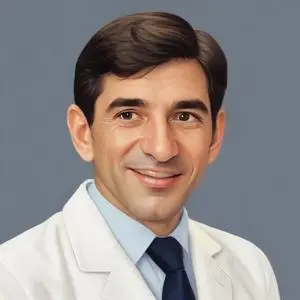
A physician and biochemist who discovered the structure and function of G-protein-coupled receptors, revolutionizing understanding of cellular communication and leading to numerous life-saving medications.
Robert Lefkowitz, a renowned American physician, internist, cardiologist, and biochemist, is best known for his groundbreaking discoveries that revealed the intricate workings of G protein-coupled receptors, earning him the 2012 Nobel Prize in Chemistry alongside Brian Kobilka. His pioneering work has revolutionized our understanding of cellular communication, paving the way for significant advancements in the fields of medicine and biochemistry.
Born on April 15, 1943, in The Bronx, New York, to Jewish parents Max and Rose Lefkowitz, Robert's family had emigrated to the United States from Poland in the late 19th century. He graduated from the Bronx High School of Science in 1959 and went on to attend Columbia College, where he earned a Bachelor of Arts in chemistry in 1962. Under the guidance of Ronald Breslow, Lefkowitz developed a strong foundation in chemistry that would later shape his research endeavors.
After graduating from Columbia University College of Physicians and Surgeons in 1966 with an M.D. degree, Lefkowitz served as a clinical and research associate at the National Institutes of Health from 1968 to 1970. He then joined Duke University Medical Center, where he was appointed associate professor of medicine and assistant professor of biochemistry in 1973. Over the years, he rose through the ranks, becoming a professor of medicine in 1977 and later, James B. Duke Professor of Medicine in 1982.
Lefkowitz's research focus on receptor biology and signal transduction led to several seminal discoveries. He is credited with:
Lefkowitz's contributions to the field of biochemistry have been recognized with numerous awards and honors, including:
Lefkowitz's work embodies a deep-seated passion for understanding the intricate mechanisms that govern life. He believes that:
"The most important thing in science is to ask the right question. If you ask the right question, the answer will come."
This philosophy has guided his research career, driving him to pursue complex problems and uncover novel insights that have transformed our understanding of cellular biology.
Beyond his scientific achievements, Lefkowitz's life is marked by:
Lefkowitz's work has far-reaching implications for human health and disease. His discoveries have paved the way for the development of novel therapeutics targeting G protein-coupled receptors, which are involved in various diseases, including:
His contributions have also inspired new avenues of research, fostering a deeper understanding of cellular biology and its applications in medicine and beyond.
Robert Lefkowitz's remarkable career serves as a testament to the power of human curiosity and perseverance. His groundbreaking discoveries have left an indelible mark on the scientific community, inspiring future generations of researchers to continue exploring the intricacies of life.
66 Years Old
Developed super-resolution microscopy, allowing for unprecedented visualization of cellular structures and dynamics. Pioneering work in imaging has greatly advanced our understanding of biological processes.
73 Years Old
A pioneer in single-molecule spectroscopy, he developed methods to visualize and study individual molecules, revolutionizing our understanding of molecular behavior. His work has far-reaching implications for fields like biomedicine and materials science.
63 Years Old
Developed super-resolution microscopy techniques, allowing for unprecedented visualization of molecular structures and earning a Nobel Prize in Chemistry in 2014.
85 Years Old
A Luxembourgian-French biologist and academic who discovered the genetic mechanisms of innate immunity, leading to a deeper understanding of the human immune system and its response to infection.
