


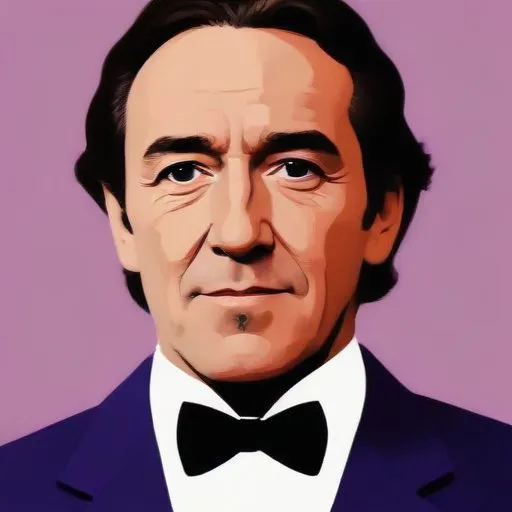
A Scottish businessman and politician who served as a Conservative member of the House of Lords and was involved in various industries, including banking and agriculture.
Robert Alexander Lindsay, 29th Earl of Crawford, 12th Earl of Balcarres, and Baron Balniel, was a Scottish hereditary peer and Conservative politician who made a lasting impact on British politics and society. As a member of Parliament from 1955 to 1974 and a life peer in the House of Lords, Lord Crawford and Balcarres left an indelible mark on the country's governance and aristocracy.
Born on 5 March 1927, Lord Crawford was the elder son of the 28th Earl of Crawford and 11th Earl of Balcarres. He received his education at Eton College and Trinity College, Cambridge, before serving in the Grenadier Guards from 1945 to 1948. Following his military service, he served as honorary attaché at the British Embassy in Paris from 1950 to 1951 and worked for the Conservative Research Department.
Lord Crawford's political career spanned nearly two decades, during which he held various positions of significance. He was elected to Parliament in 1955, representing Hertford, and served as parliamentary private secretary to Henry Brooke until 1959. He later became president of the Rural District Councils Association (1959-1965) and chair of the National Association for Mental Health (1963-1970).
During the Conservative Party's time in opposition, Lord Crawford served as spokesman on Foreign Affairs (1965-1967) and later joined the Shadow Cabinet as spokesman on Social Services. Following the party's victory in the 1970 general election, he served as minister of state for Defence and later as minister of state for Foreign and Commonwealth Affairs.
After being defeated in the 1974 general election, Lord Crawford was given a life peerage and joined the House of Lords. He continued to play an important role in Scottish aristocracy, serving as Premier Earl of Scotland from 1975 to 2019 and as chief of Clan Lindsay.
Lord Crawford's legacy extended beyond politics, as he became the surviving former MP with the earliest date of first election, having first entered Parliament in 1955. He passed away on 18 March 2023, leaving behind a rich heritage and a lasting impact on British politics and society.
Lord Crawford's contributions to British politics and society have had a lasting impact on the country. His legacy continues to inspire future generations of politicians and aristocrats, ensuring his place in history as a prominent figure of the 20th century.
Lord Crawford's life and career spanned a significant period in British history, from the post-war era to the late 20th century. His contributions to politics, society, and aristocracy have left an indelible mark on the country, cementing his place as a notable figure in British history.
Born in 1871
Prolific writer of historical novels and adventure stories, also a talented landscape painter.
Born in 1869
The Prime Minister who infamously appeased Nazi Germany with the Munich Agreement, hoping to avoid war, but ultimately contributing to its outbreak. He's a symbol of failed diplomacy and naivety in the face of aggression.
Born in 1897
A British politician who served as Prime Minister from 1955 to 1957, known for his role in the Suez Crisis and his diplomatic efforts during the Cold War.
Born in 1894
A British politician who served as Prime Minister from 1957 to 1963, known for leading the country through a period of economic prosperity and decolonization.
Born in 1903
A British aristocrat who served as Prime Minister from 1963 to 1964, known for his brief tenure and aristocratic background.
Born in 1885
Won the 1952 Olympic Games marathon in Helsinki, Finland, and held the world record in the marathon from 1952 to 1953.
Born in 1916
The Prime Minister who led the UK into the European Economic Community (EEC) and navigated the country through a period of economic and industrial turmoil. He's also known for his diplomatic efforts, particularly in regards to the Cold War.
Born in 1912
A British politician who served as Prime Minister from 1976 to 1979, known for his efforts to stabilize the economy and navigate the country through a period of industrial unrest.
