


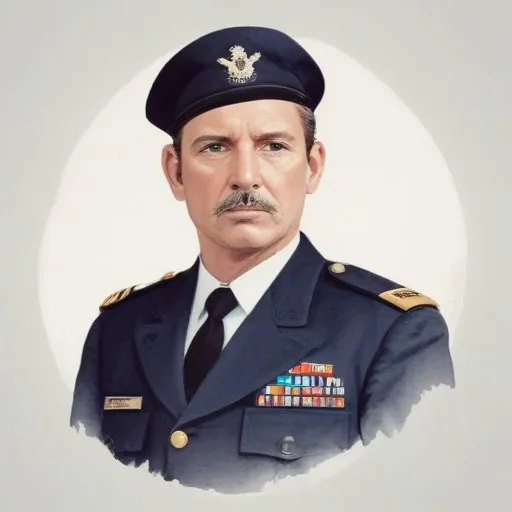
A naval officer who served as Superintendent of the United States Naval Academy and later became a prominent businessman, known for his leadership and entrepreneurial spirit.
Robert Means Thompson was a trailblazing figure in the United States Navy, a shrewd business magnate, and a passionate philanthropist. As the president of the American Olympic Association, he left an indelible mark on the world of sports, earning him a revered place in the annals of history.
Born on March 2, 1849, in Corsica, Pennsylvania, Thompson's life was marked by a series of illustrious achievements. He graduated tenth in his class from the United States Naval Academy in 1868 and went on to serve in various capacities, including the West Indian Squadron, the Mediterranean Squadron, and the Naval Torpedo Station in Newport, Rhode Island.
Thompson's naval career was punctuated by his resignation in 1871, after which he pursued law, studying at Harvard and eventually practicing in Boston. However, his entrepreneurial spirit soon got the better of him, and he ventured into the world of mining and smelting, accumulating a vast fortune in the process.
Thompson's impact on the sporting world cannot be overstated. As the twice-elected president of the American Olympic Association, he played a pivotal role in shaping the country's Olympic presence. His leadership during the 1912 and 1924 Summer Olympics left a lasting legacy, cementing his status as a champion of athletic excellence.
In addition to his Olympic endeavors, Thompson was a devoted philanthropist. He was instrumental in organizing the Navy Athletic Association and donated the coveted Thompson Cup, awarded to the winner of the annual Army-Navy Game. His generosity also extended to the New York Athletic Club, which he served as president in 1912.
Thompson's contributions to the world of sports, business, and philanthropy have left an indelible mark on modern society. His commitment to excellence and his passion for athletic achievement continue to inspire generations of Olympians, entrepreneurs, and leaders.
In the context of American history, Thompson's achievements are all the more remarkable. His life spanned a period of rapid industrialization, immigration, and social change, and his responses to these challenges helped shape the country's sporting and cultural landscape.
As a testament to his enduring legacy, the USS Thompson (DD-627) was named in his honor, a destroyer that served during World War II. Today, Thompson's spirit of adventure, leadership, and philanthropy continues to inspire, a beacon of excellence in a rapidly changing world.
Robert Means Thompson's remarkable life serves as a poignant reminder that true greatness lies not in individual achievements, but in the lasting impact one has on the world. As a champion of athletic excellence, a shrewd businessman, and a devoted philanthropist, Thompson's legacy will continue to inspire generations to come.
Born in 1858
A pioneering leader who championed progressive reforms, trust-busting, and conservation, earning a Nobel Peace Prize for mediating the Russo-Japanese War. He's also famous for his rugged outdoorsmanship and "big stick" diplomacy.
Born in 1824
The 22nd Vice President of the United States, a prominent banker and politician who served under President Benjamin Harrison from 1889 to 1893, known for his strong advocacy for the gold standard and his role in shaping the country's monetary policy.
Born in 1850
A prominent historian and politician who served as a U.S. Senator and was a key figure in the development of the U.S. foreign policy, particularly in the early 20th century.
Born in 1857
The 27th President of the United States was a lawyer and jurist who served as the only person to hold the offices of President and Chief Justice of the United States. He's known for his significant contributions to the country's judicial system.
Born in 1845
A prominent lawyer and politician who served as Secretary of State, earning a Nobel Peace Prize for his diplomatic efforts. He's most known for his work in international arbitration and conflict resolution.
Born in 1867
A prominent figure in American politics, serving as Secretary of State and playing a key role in shaping foreign policy during World War II. He's also known for his advocacy of international cooperation and collective security.
Born in 1874
A prominent publisher and politician who served as the 46th Secretary of the Navy, playing a crucial role in preparing the US Navy for World War II. He's most known for his efforts in modernizing the Navy and increasing its strength during wartime.
Born in 1892
First U.S. Secretary of Defense, playing a crucial role in shaping the country's military strategy and policy during the early Cold War era. He's also known for his mysterious death, which sparked numerous conspiracy theories.
