


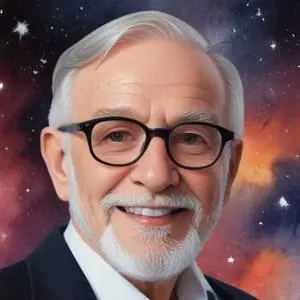
Prolific science fiction and fantasy writer, editor, and multiple Hugo and Nebula Award winner, known for exploring complex themes and ideas in his works.
Robert Silverberg is renowned for his extraordinary contributions to the science fiction genre, having written over 600 books and numerous short stories that have captivated readers for decades. With a career spanning over six decades, he has won numerous Hugo and Nebula Awards, solidifying his position as a Grand Master of Science Fiction.
Born on January 15, 1935, in Brooklyn, New York, to Jewish parents, Silverberg's love affair with science fiction began at a young age. He was an avid reader and started submitting stories to science fiction magazines during his early teenage years.
A graduate of Columbia University with a BA in English Literature in 1956, Silverberg's writing career took off shortly after. He wrote his first juvenile novel, Revolt on Alpha C, which was published by Thomas Y. Crowell in 1955.
Silverberg's writing pace wasastonishing, with a output of a million words a year during the late 1950s. He wrote for various magazines and Ace Doubles, often using pseudonyms, including Robert Randall, in collaboration with Randall Garrett.
Between 1956 and 1959, Silverberg averaged five published stories a month, with a staggering 80 stories published in 1958 alone. When the science fiction market slumped in 1959, he diversified his writing to other genres, including historical nonfiction, crime fiction, and softcore pornography.
Silverberg has won numerous awards for his contributions to science fiction. He won his first Hugo Award in 1956 as the best new writer and has since won multiple Hugo and Nebula Awards.
In 2005, he was inducted into the Science Fiction and Fantasy Hall of Fame, cementing his legacy as a Grand Master of Science Fiction.
Silverberg's impact on science fiction is immense. He has inspired generations of writers, including George R.R. Martin, who has credited Silverberg's work as an influence on his own writing.
Silverberg's stories often explored complex themes, such as human nature, morality, and the consequences of technological advancements. His work continues to be widely read and studied, ensuring his legacy as a science fiction icon.
Silverberg has attended every Hugo Award ceremony since the inaugural event in 1953, a testament to his enduring passion for the genre.
Despite his prolific output, Silverberg has remained humble and dedicated to his craft, inspiring countless writers and fans around the world.
Robert Silverberg's contributions to science fiction are immeasurable. His work has left an indelible mark on the genre, inspiring new generations of writers and readers alike.
As a Grand Master of Science Fiction, Silverberg's legacy continues to grow, ensuring that his stories and ideas will remain a vital part of science fiction's rich heritage.
Born in 1920
A renowned science fiction author and biochemistry professor who wrote or edited more than 500 books and an estimated 90,000 letters and postcards throughout his lifetime.
Born in 1917
Pioneering science fiction author who wrote prophetic and imaginative novels, such as "2001: A Space Odyssey", that explored the intersection of technology and humanity.
Born in 1920
Prolific author of poetic and imaginative science fiction, exploring the human condition through fantastical worlds and characters, with works adapted into films and TV shows.
Born in 1919
Pioneering science fiction author and journalist, known for exploring complex social and philosophical themes in his works, including the award-winning novel "Gateway".
96 Years Old
A celebrated author of fantasy and science fiction, crafting imaginative worlds and exploring complex social themes, particularly in the Earthsea series and The Left Hand of Darkness.
92 Years Old
Prolific writer of science fiction, fantasy, and horror, creating iconic works like "A Boy and His Dog" and "I Have No Mouth, and I Must Scream", influencing generations of writers and filmmakers.
97 Years Old
Pioneering science fiction author and philosopher who explored the nature of reality, identity, and humanity through thought-provoking novels and short stories. His works often delved into the consequences of advanced technology and alternate realities.
Born in 1913
Pioneering science fiction author and screenwriter behind iconic works like "The Demolished Man" and "Star Trek" episodes, blending psychology, mystery, and futuristic themes. 42
