


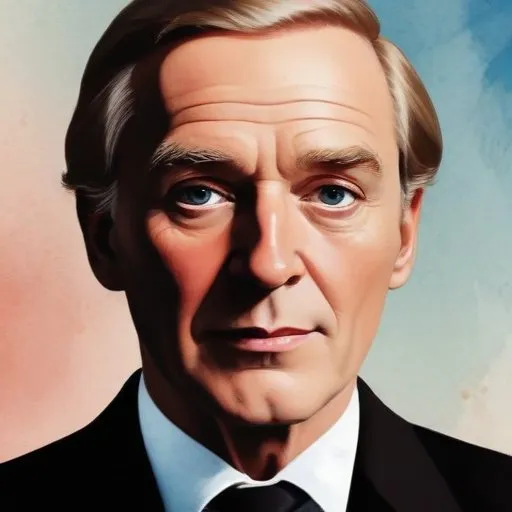
An American author and illustrator, best known for his novel "The King in Yellow", a collection of supernatural short stories that inspired many famous authors, including H.P. Lovecraft.
Robert W. Chambers, an American artist and fiction writer, is best known for his book of short stories titled "The King in Yellow", published in 1895. This iconic collection of stories has had a profound impact on the literary world, influencing the likes of H.P. Lovecraft and inspiring countless writers and artists.
Chambers was born on May 26, 1865, in Brooklyn, New York, to William P. Chambers, a corporate and bankruptcy lawyer, and Caroline Smith Boughton. His parents met when his mother was just 12 years old, and William P. was interning with her father, Joseph Boughton, a prominent corporate lawyer.
Chambers' early education took place at the Brooklyn Polytechnic Institute, followed by his entry into the Art Students League, where he studied alongside fellow artist Charles Dana Gibson. He further honed his skills in Paris at the École des Beaux-Arts and the Académie Julian from 1886 to 1893.
Chambers' artistic talent was first displayed at the Salon as early as 1889. Upon his return to New York, he successfully sold his illustrations to notable magazines such as Life, Truth, and Vogue.
For reasons unknown, Chambers shifted his focus from art to writing, producing his first novel, "In the Quarter", in 1887. This marked the beginning of a prolific writing career, which would see him publish numerous novels, short stories, and essays.
"The King in Yellow" is widely regarded as Chambers' magnum opus. This collection of short stories delves into the realms of horror, fantasy, and science fiction, showcasing Chambers' unique narrative style and imaginative prowess.
Chambers' work has had a profound impact on modern literature, inspiring authors such as H.P. Lovecraft, Ambrose Bierce, and Algernon Blackwood. His stories have also been adapted into films, plays, and graphic novels, cementing his legacy in popular culture.
Chambers' personal life remains somewhat of a mystery. However, it is known that he was part of a prominent family, with his great-grandfather, William Chambers, being a lieutenant in the British Royal Navy.
Robert W. Chambers' life and work are a testament to his innovative spirit and creative genius. As an artist, writer, and visionary, he has left an indelible mark on the world of literature, inspiring generations of writers and artists to come.
Born in 1890
Creator of cosmic horror, crafting eerie tales of ancient deities and supernatural entities that lurk in the shadows, exploring the darker aspects of human nature. 82
Born in 1809
A master of dark and atmospheric storytelling, crafting haunting tales of mystery and horror that continue to captivate readers to this day.
Born in 1847
Creator of the iconic vampire Count Dracula, a character that has become a cultural phenomenon, inspiring countless adaptations and influencing the horror genre as a whole.
Born in 1797
Author of Gothic novels, particularly the iconic "Frankenstein", which has become a cultural phenomenon and influenced countless adaptations and reinterpretations.
Born in 1850
A Scottish novelist, poet, and essayist who wrote iconic adventure novels, including "Treasure Island" and "Dr. Jekyll and Mr. Hyde", that have captivated readers for generations.
Born in 1854
A witty and flamboyant literary mastermind, renowned for crafting clever, humorous, and poignant works that continue to delight audiences with their clever wordplay and societal commentary.
Born in 1859
Creator of the iconic detective Sherlock Holmes, known for his ingenious mysteries and clever plot twists.
Born in 1783
Author of the iconic tales "The Legend of Sleepy Hollow" and "Rip Van Winkle", credited with creating the first American folklore and shaping the country's literary identity.
