


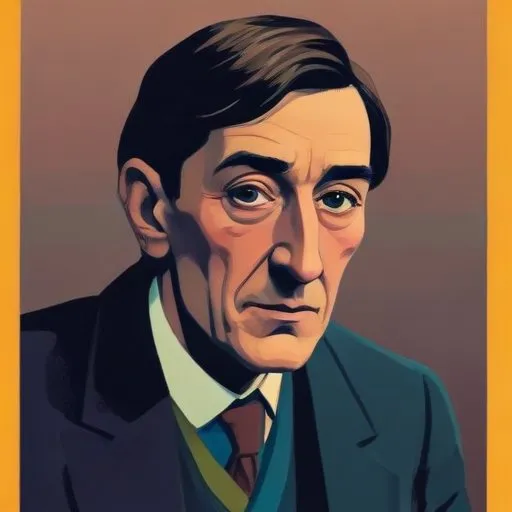
A pioneering art critic and painter who introduced Post-Impressionism to Britain, promoting artists like Van Gogh and Gauguin through exhibitions and writings.
Roger Fry, a trailblazing English painter, art critic, and member of the esteemed Bloomsbury Group, is renowned for introducing Post-Impressionism to Britain and elevating the country's artistic landscape. His groundbreaking work not only reshaped the nation's artistic taste but also earned him the distinction of being the most influential figure on British art since John Ruskin.
Born on December 14, 1866, in London, Roger Fry grew up in a wealthy Quaker family in Highgate. His siblings, including Joan Mary Fry, Agnes Fry, and Margery Fry, would all go on to lead remarkable lives, with Margery becoming the principal of Somerville College, Oxford. Fry's educational background was marked by excellence, first at Clifton College and then at King's College, Cambridge, where he was part of the esteemed Conversazione Society.
Fry's fascination with art led him toParis and Italy, where he immersed himself in the study of art. He eventually specialized in landscape painting, honing his skills and developing a deep understanding of the art world. In 1896, he married artist Helen Coombe, and the couple had two children, Pamela and Julian. However, their happiness was short-lived, as Helen's mental health began to deteriorate, leading to her institutionalization in 1910. Fry took on the responsibilities of caring for their children with the help of his sister, Joan Fry.
Fry's most significant contribution to the art world was his introduction of Post-Impressionism to Britain. He organized the first Post-Impressionist exhibition in 1910, featuring works by artists like Paul Cézanne, Vincent van Gogh, and Pablo Picasso. This exhibition not only sparked controversy but also ignited a passion for modern art in Britain. Fry's advocacy for the movement helped shape the nation's artistic identity and paved the way for future generations of artists.
Fry's artistic philosophy emphasized the importance of formal properties in paintings, urging viewers to appreciate the aesthetic qualities of a work rather than its representational content. As an art critic, he wrote extensively on art, producing reviews and articles that showcased his exceptional critical acumen. His writing not only reflected his deep understanding of art but also inspired a new wave of artists and art enthusiasts.
Fry's impact on modern society extends far beyond the art world. He was instrumental in shaping British cultural identity, influencing the development of modern art, and inspiring future generations of artists, critics, and collectors. His advocacy for modern art helped pave the way for future art movements, including Surrealism, Abstract Expressionism, and Pop Art.
Roger Fry's remarkable life and achievements were recognized with several honors, including the prestigious Russell Lectureship at the University of Edinburgh. Today, his work continues to inspire art lovers around the world, with his legacy cemented in the annals of art history.
Roger Fry's remarkable life, marked by his unwavering passion for art, his innovative spirit, and his far-reaching influence, continues to inspire and educate art enthusiasts to this day. As a true visionary, he remains an integral part of British art history, leaving behind a legacy that will endure for generations to come.
67 Years Old
A British radio host and presenter, best known for his work on BBC Radio 2 and BBC Radio London, entertaining audiences with his warm and engaging on-air personality.
Born in 1885
A British painter and designer who was a key figure in the Bloomsbury Group, creating vibrant, expressive works that blended modernism with traditional techniques. He's also known for his textile designs and decorative arts.
Born in 1882
A pioneering author of modernist literature, known for experimental novels and essays that explored the human experience, blurring the lines between reality and fiction.
Born in 1879
This celebrated author crafted novels and plays that probed the human condition, exploring themes of social class, morality, and personal relationships, with a distinctive wit and insight. Their works continue to captivate audiences with their nuanced portrayals of English society during the early 20th century.
Born in 1880
A leading figure in the Bloomsbury Group, known for revolutionizing biography writing with witty, irreverent, and psychologically nuanced portraits of historical figures.
Born in 1883
A pioneering economist who revolutionized modern economic theory with his groundbreaking ideas on government intervention and fiscal policy, shaping global economic policies.
Born in 1872
A renowned thinker who made significant contributions to mathematics, philosophy, and social commentary, known for his influential writings on logic, ethics, and politics. He's a prominent figure in shaping modern intellectual thought.
