


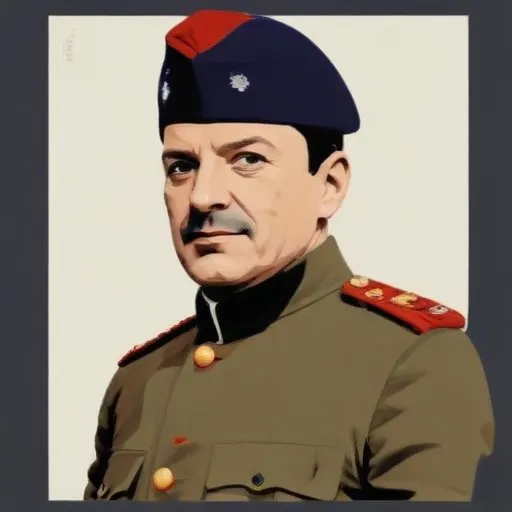
A French Minister of the Interior who was falsely accused of desertion during World War I, leading to his suicide, and is now seen as a symbol of injustice and wrongful accusation.
Roger Salengro, a French politician born on May 30, 1890, is best known for his role as Minister of the Interior during the Popular Front government in 1936, where he implemented groundbreaking social reforms that shook the French political landscape. His brief but impactful tenure was marked by the signing of the Matignon Agreements, a landmark achievement that improved workers' rights and wages.
In 1909, Salengro enrolled at the University of Lille to study literature. This was a formative period in his life, as he joined the French Section of the Workers International, a socialist party, and founded a left-wing students' organization.
In 1914, Salengro signed up to join the French military for World War I, despite having spoken out as a pacifist in previous years. Captured by the Germans on October 7, 1915, he became a prisoner of war. He refused to work in a German factory, and was incarcerated in harsh conditions, weighing only 42 kg when he was freed after the war. In 1918, he became a journalist, and resumed his involvement in politics.
In 1919, Salengro was elected municipal councillor in Lille, and general councillor of the Lille-Sud-Ouest canton. In 1925, he was elected mayor of Lille, a position he would hold until 1936. He was also elected Member of Parliament in 1928, and reelected in 1932 and 1936.
In 1936, the Popular Front government, led by Léon Blum, appointed Salengro Minister of the Interior. This marked the pinnacle of his career, as he worked tirelessly to implement social reforms, including the signing of the Matignon Agreements. However, his tenure was cut short by a vicious calumny campaign orchestrated by extreme right-wing newspapers, which drove him to suicide on November 18, 1936.
Roger Salengro's legacy is complex and multifaceted. On one hand, he was a champion of social reform, who fought for workers' rights and improved the lives of countless French citizens. On the other hand, his tragic suicide serves as a testament to the brutal and divisive nature of French politics during the interwar period.
Salengro's story is inextricably linked to the tumultuous history of France during the 20th century. His rise to prominence was marked by the struggle for social reform, while his tragic demise was a result of the extreme right-wing backlash against the Popular Front government. Today, he is remembered as a pioneering figure in French politics, who fought for the rights of the working class and paved the way for future generations of social reformers.
Born in 1872
A French lawyer and politician who served as Prime Minister of France, known for his leadership during the Popular Front government and his role in shaping the country's social and economic policies.
Born in 1884
Led France through the Munich Crisis, signing the Munich Agreement, and played a crucial role in the country's early World War II efforts. He's infamous for appeasing Nazi Germany, hoping to avoid war.
Born in 1878
A French lawyer and politician who served as Prime Minister of France during the tumultuous period of World War II, known for his attempts to reform the French government and resist German occupation.
Born in 1895
A French politician who served as Minister of Air and Minister of Commerce, known for his role in shaping France's aviation industry and advocating for European integration.
Born in 1879
A French labor leader who fought for workers' rights and was awarded the Nobel Peace Prize in 1951 for his efforts to promote international cooperation and peace. He played a key role in shaping the modern labor movement.
Born in 1884
The first President of the Fourth Republic, serving from 1947 to 1954, known for his role in post-war France's reconstruction and establishment of the European Coal and Steel Community.
