


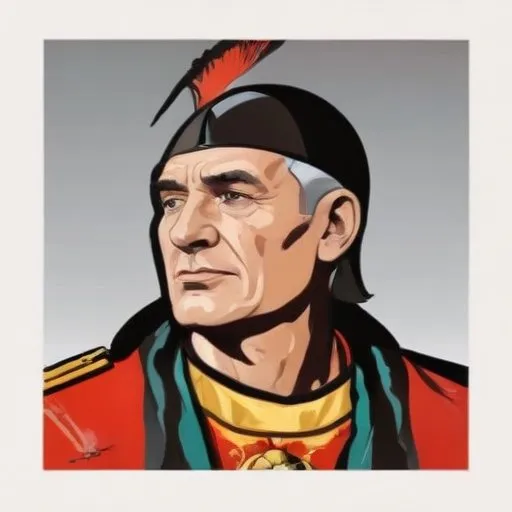
A Polish military leader who fought in the November Uprising against Russian rule and later became a prominent figure in the Polish independence movement. He's remembered for his bravery and strategic prowess on the battlefield.
Roman Sanguszko, a Polish aristocrat and patriot, is renowned for his unwavering dedication to the cause of Polish independence and his unrelenting struggle against Russian oppression. Born in 1800, Sanguszko's life was a testament to his bravery, conviction, and loyalty to his nation.
Roman Sanguszko was born on May 6, 1800, in his family's manor in Volhynia, Ukraine. As the eldest son, he was the heir to the vast fortune of the Kowel line of the Sanguszko family, one of the most prominent and wealthy families in the former Polish-Lithuanian Commonwealth. His early life was marked by tragedy when he was forced to join the Russian Imperial Guard, as per Tsar Alexander I's decree, which required all aristocratic heirs to attend Russian military schools to ensure their families' loyalty.
After a brief stint in the Russian Imperial Guard, Sanguszko was allowed to return home due to poor health. He then moved to Berlin, where he graduated from the local university. In 1829, he married Natalia Potocka, a member of the influential Potocki family, and they had a daughter, Maria Klementyna. Tragedy struck again when Natalia passed away soon after giving birth.
Despondent and grief-stricken, Sanguszko briefly considered joining the Capuchin friars but eventually decided to join the Polish Army to fight in the November Uprising against Russian rule. He distinguished himself in battles at Lubartw and Zamo, rising through the ranks to become an adjutant to General Jan Skrzynecki. For his bravery, he was awarded the Virtuti Militari, one of Poland's highest military honors.
In June 1831, Sanguszko was taken prisoner by the Russians and subsequently tried for high treason. Despite being offered a pardon if he renounced his loyalty to the Polish uprising's leaders, Sanguszko refused, and the court sentenced him to the loss of his noble status, confiscation of his property, and exile to Siberia. To protect his daughter's inheritance, he transferred ownership of his vast fortune to her.
Roman Sanguszko's unwavering dedication to Polish independence and his unrelenting struggle against Russian oppression have made him a revered figure in Polish history. His bravery, conviction, and loyalty to his nation have inspired generations of Poles to fight for their freedom and self-determination. Today, Sanguszko is remembered as a symbol of Polish resistance against foreign occupation and a testament to the indomitable spirit of the Polish people.
Roman Sanguszko's story serves as a poignant reminder of the struggles and sacrifices made by the Polish people in their quest for freedom and independence. His bravery, conviction, and loyalty to his nation have cemented his place in Polish history as a champion of liberty and a symbol of resistance against foreign oppression.
