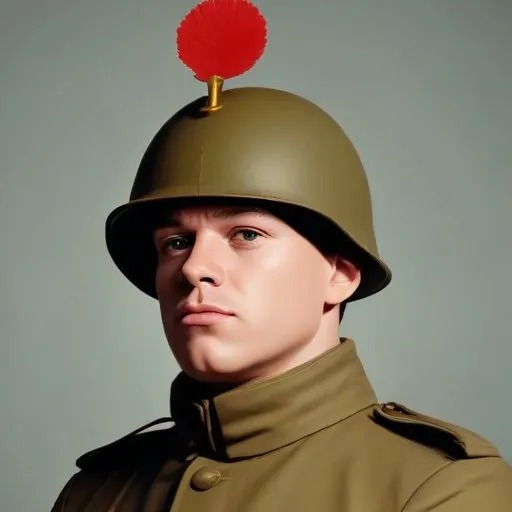
The Reluctant Tommy: The Pacifist Soldier Who Refused to Take Lives
The Unlikely Pacifist
Ronald Skirth, a British soldier who served in the Royal Garrison Artillery during World War I, is known for his remarkable act of conscience during the war. Despite being a skilled artilleryman, Skirth deliberately made errors in his targeting calculations to ensure that the guns of his battery missed their aiming point, giving the enemy a chance to evacuate. This courageous act of pacifism, motivated by his experiences in the Battle of Messines and the Battle of Passchendaele, set him apart from his comrades and earned him a unique place in history.
Early Life and War Service
Born on December 11, 1897, in Chelmsford, Skirth grew up in Bexhill-on-Sea. He volunteered for the British Army under the Derby Scheme in 1916 and became a Battery Commander's Assistant in the Royal Garrison Artillery. Skirth saw action in the Battle of Messines, where two of his closest friends were killed, and later in the Battle of Passchendaele.
The Turning Point
During the Battle of Messines, Skirth stumbled upon the body of a dead German soldier, approximately his own age. This encounter sparked an epiphany, as Skirth realized that one of the shells he had targeted might well have killed the young German. This moral awakening led him to question the nature of war and his role in it. Skirth's decision to deliberately make errors in his targeting calculations was a bold statement against the senseless violence of war.
A Pacifist in Uniform
Skirth's actions did not go unnoticed. He was demoted in rank from Corporal to Bombardier after arguing with a superior officer over the use of a French church for target practice. Despite this, Skirth continued to make deliberate errors in his calculations, knowing that it could mean court-martial and even execution. His actions were a testament to his conviction that killing was morally wrong.
Late Life and Legacy
After retiring from a career as a teacher, Skirth wrote a memoir of his years in the army, titled
The Reluctant Tommy, which was published in 2010. The book provides a unique insight into the mind of a pacifist soldier and his experiences during World War I.
Influence and Impact
Skirth's story serves as a powerful reminder of the human cost of war and the importance of individual conscience. His actions inspired others to question the morality of war and to seek alternative paths. Today, Skirth's legacy continues to inspire pacifists and peace activists around the world.
- Birth Date: December 11, 1897
- Death Date: 1977
- War Service: Royal Garrison Artillery, World War I
- Notable Battles: Battle of Messines, Battle of Passchendaele
- Occupation: Teacher, Memoirist
Skirth's remarkable story serves as a powerful reminder of the importance of individual conscience and the human cost of war. His actions continue to inspire pacifists and peace activists, ensuring that his legacy will endure for generations to come.
FAQ
What was Ronald Skirths role in World War II?
Ronald Skirth was a British soldier who served in North Africa and Italy during World War II, where he was captured by German forces and spent several years in a prisoner-of-war camp.
What was Ronald Skirths early life like?
Ronald Skirth was born in England and grew up in a military family, eventually enlisting in the British Army and serving in several campaigns during World War II.
What decorations did Ronald Skirth receive?
Ronald Skirth received the Military Cross for his bravery during the war, as well as several other decorations for his service.
What was Ronald Skirths experience as a prisoner of war?
Ronald Skirths experience as a prisoner of war was marked by hardship and deprivation, but he eventually escaped and returned to England, where he was hailed as a hero.
What did Ronald Skirth do after the war?
After the war, Ronald Skirth returned to civilian life and pursued a career in business, eventually becoming a successful entrepreneur and philanthropist.