


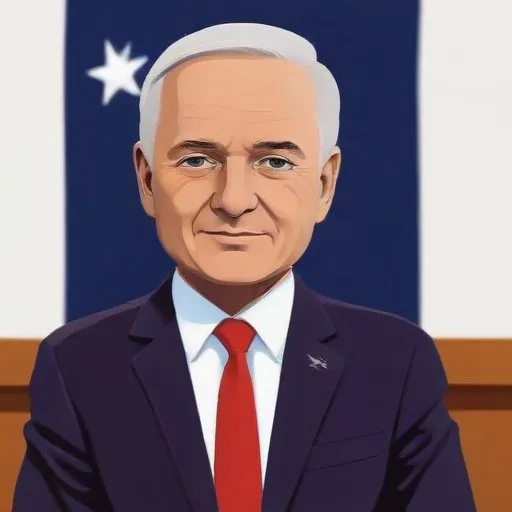
The 17th Premier of Western Australia, serving from 1947 to 1953, known for his leadership during post-war reconstruction and significant infrastructure development. He played a crucial role in shaping the state's economy and infrastructure.
Ross McLarty is renowned for his prominent role in Australian politics, particularly as the 17th Premier of Western Australia. During his tenure, he made significant contributions to the state's development, earning him a revered place in the country's history.
Born on March 17, 1891, in Pinjarra, Western Australia, Ross McLarty was the youngest of seven children to Edward McLarty, a farmer and grazier, and Mary Jane Campbell. He attended Pinjarra State School and Perth Boys High School, before enlisting in the Australian Imperial Force in 1916.
McLarty's military service was marked by bravery and distinction. He was promoted to corporal and assigned to the 44th Battalion, arriving in England in 1916. During his time on the Western Front, he was awarded the Military Medal for bravery in the field on January 25, 1918, at Passchendaele. He later received a commission as a second lieutenant and was promoted to lieutenant.
After the war, McLarty returned to farming in Pinjarra and eventually entered politics. He campaigned as a Nationalist candidate in the 1930 state election, winning the lower house seat of Murray-Wellington with the slogan "A practical farmer for a farming electorate."
McLarty's political career was marked by several milestones. He succeeded Robert Ross McDonald as leader of the newly formed Liberal Party in 1946, and eventually became the Premier of Western Australia in 1947. During his tenure, he focused on post-war reconstruction, industrial development, and social welfare.
Ross McLarty's legacy is characterized by his contributions to Western Australia's growth and development. He played a crucial role in shaping the state's economy, infrastructure, and social fabric. His commitment to public service and leadership has inspired generations of Australians.
Ross McLarty married Violet Olive Margaret Herron in 1922, and they had no children together. He was known for his strong sense of community and was involved in various organizations, including the Returned Sailors, Soldiers and Airmen's Imperial League of Australia.
Ross McLarty's remarkable life and career serve as a testament to his dedication, perseverance, and vision for a better Australia. His legacy continues to inspire and influence Australian politics and society to this day.
96 Years Old
Leader of the Australian Labor Party who served as Prime Minister from 1983 to 1991, known for his charismatic leadership and economic reforms.
82 Years Old
The 24th Prime Minister of Australia, a Labor Party leader who implemented significant economic reforms, including deregulation and privatization, and is known for his bold and charismatic leadership style.
73 Years Old
A British singer-songwriter and pianist known for his emotive, poetic lyrics and soaring melodies, crafting introspective and atmospheric indie-pop soundscapes.
64 Years Old
The first female Prime Minister of Australia, serving from 2010 to 2013, known for her progressive policies and leadership during a period of significant economic reform.
68 Years Old
The 26th Prime Minister of Australia, a diplomat, and leader who apologized to the Indigenous Australians for past injustices and played a key role in shaping the country's climate change policies.
68 Years Old
The 28th Prime Minister of Australia, a conservative leader who served from 2013 to 2015, known for his tough stance on immigration and climate change skepticism. He's also a Rhodes Scholar and athlete.
71 Years Old
Australian journalist and politician who served as the 29th Prime Minister of Australia, known for his leadership during a tumultuous period in Australian politics and his advocacy for progressive policies.
58 Years Old
The 30th Prime Minister of Australia, serving from 2018 to 2022, known for his conservative policies and leadership during the COVID-19 pandemic. He's also remembered for his role in shaping Australia's climate change response.
