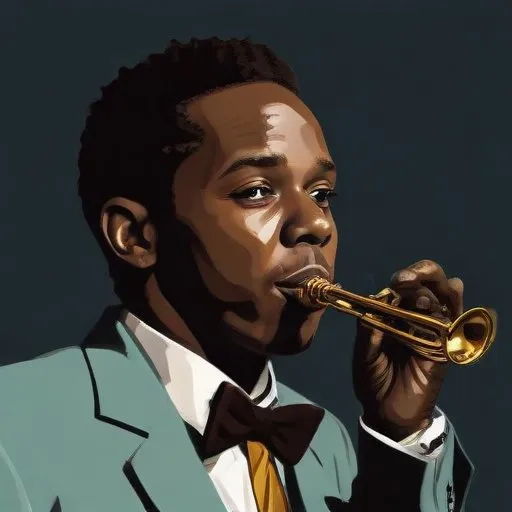
Roy Hargrove: The Maverick Trumpeter Who Redefined Jazz
A Grammy-Winning Legacy
Roy Hargrove, the virtuosic trumpeter, and flugelhorn player, left an indelible mark on the jazz world. With two Grammy Awards under his belt, Hargrove's innovative approach to music blurred the lines between genres, earning him international acclaim.
Early Influences and Formation
Born on October 16, 1969, in Waco, Texas, Hargrove's musical journey began at the tender age of 9, when he started taking cornet lessons at school. His family's move to Dallas, Texas, exposed him to the rich musical heritage of the city. A pivotal moment came when saxophonist
David "Fathead" Newman, a sideman in
Ray Charles' band, visited Hargrove's junior high school, igniting a passion that would stay with him forever.
Rise to Prominence
Discovered by
Wynton Marsalis at the
Booker T. Washington High School for the Performing and Visual Arts in Dallas, Hargrove's talent was undeniable. He went on to study at Boston's Berklee College of Music, but it was his numerous jam sessions in New York City that truly honed his skills. His first studio recording with saxophonist Bobby Watson marked the beginning of a remarkable career.
Genre-Defying Collaborations
Hargrove's fearless approach to music led to collaborations with a diverse array of artists, including hip-hop, soul, R&B, and alternative rock musicians. As he once said, "If a cat can play, a cat can play. If it's gospel, funk, R&B, jazz, or hip-hop, if it's something that gets in your ear and it's good, that's what matters." This philosophy is reflected in his work with the likes of
Erykah Badu, Common, and D'Angelo.
Notable Albums and Projects
- Pipeline (1994) - Hargrove's sophomore album, showcasing his hard-bop style
- Family (1995) - A soulful exploration of jazz, funk, and R&B
- Habana (1997) - A Grammy-winning album that blended Afro-Cuban rhythms with jazz
- Directions in Groove (2001) - A fusion of jazz, R&B, and hip-hop
Philosophical Contributions and Beliefs
Hargrove's music was a reflection of his open-minded and inclusive approach to art. He believed in the power of music to bring people together, transcending genres and boundaries. As he once said, "Music is a universal language. It's the one thing that can bring people together, no matter where they're from or what they believe in."
Legacy and Impact
Roy Hargrove's innovative spirit and genre-bending approach have inspired a new generation of musicians. His legacy extends beyond his own music, influencing the course of jazz and beyond. As a testament to his profound impact, Hargrove's music continues to resonate with listeners from all walks of life.
Awards and Honors
- Grammy Award for Best Latin Jazz Album (1998) - Habana
- Grammy Award for Best Jazz Instrumental Album (2002) - Directions in Groove
In Memoriam
Roy Hargrove's untimely passing on November 2, 2018, left the music world in mourning. However, his music and legacy continue to inspire, a testament to the indelible mark he left on the world of jazz.
FAQ
What was Roy Hargroves genre-bending approach to jazz?
Roy Hargrove blended jazz with elements of funk, soul, and Latin music, creating a unique sound that defied categorization.
What notable collaborations did Roy Hargrove have?
Roy Hargrove collaborated with a range of artists, including Herbie Hancock, Wynton Marsalis, and Erykah Badu, showcasing his adaptability and versatility.
What awards did Roy Hargrove win?
Roy Hargrove won two Grammy Awards for his work with Crisol and Habana, as well as multiple DownBeat Critics Poll Awards.
How did Roy Hargrove balance individuality and collaboration?
Roy Hargrove seamlessly balanced his own artistic vision with his desire to collaborate and learn from others, resulting in a rich and diverse discography.
What is Roy Hargroves legacy in jazz education?
Roy Hargrove was a dedicated educator, teaching at the New School and founded the jazz program at the Booker T. Washington High School for the Performing and Visual Arts.