


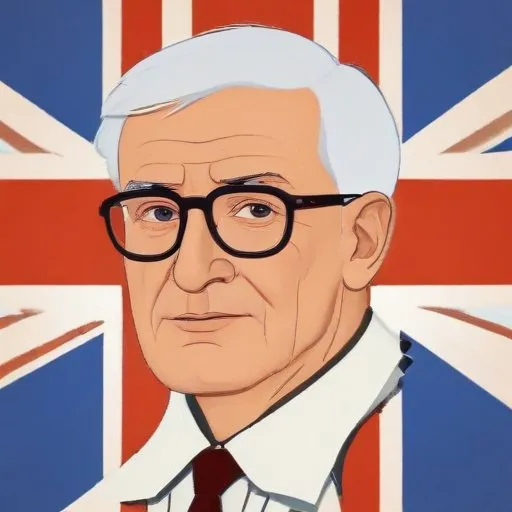
A British plant virologist who discovered and characterized several plant viruses, making significant contributions to the field of plant pathology. Their work has improved crop yields and disease management.
Roy Markham, a renowned British plant virologist, is best known for his groundbreaking contributions to the field of plant pathology, particularly in the isolation and characterization of plant viruses. As the fifth director of the prestigious John Innes Centre, Markham played a pivotal role in shaping the course of plant virology research.
Markham was born on January 29, 1916, in London, and spent his early years in Bridge of Allan, Scotland, before returning to London in 1925. He attended several schools in England and Germany, eventually finding his educational haven at St Paul's School in London, where he developed a passion for science.
Markham pursued his Bachelor's degree in biochemistry at Christ's College, Cambridge, graduating with an upper second-class degree in 1938. He then went on to complete his PhD under the guidance of Norman Pirie, focusing on the isolation of plant viruses, including tomato bushy stunt virus and tobacco mosaic virus (TMV).
Following his PhD, Markham continued his research at the Molteno Institute, Cambridge, where he worked on the biochemistry of RNAs. During this period, he crossed paths with James Watson, who would later become a Nobel laureate and a prominent figure in the discovery of DNA's double helix structure.
Markham's research on plant viruses led to significant advances in the field of plant pathology. His work on TMV, in particular, paved the way for a deeper understanding of the structure and function of viruses. His contributions also laid the foundation for the development of diagnostic techniques and disease management strategies in plant virology.
In 1967, Markham became the fifth director of the John Innes Centre, a position he held until his untimely death in 1979. During his tenure, he oversaw significant growth and expansion of the centre, fostering a culture of innovation and excellence in plant science research.
Markham's legacy extends beyond his scientific contributions. He inspired a generation of plant virologists and researchers, leaving behind a rich legacy of knowledge and discovery that continues to shape the field of plant pathology.
Markham was elected a Fellow of the Royal Society (FRS) in recognition of his outstanding contributions to science.
Markham married Margaret Mullen, whom he met during his summer holidays on the Isle of Wight. He enjoyed his vacation home on the island, where he would often spend his summers.
Roy Markham's remarkable life and work serve as a testament to his dedication to the pursuit of scientific knowledge and his passion for advancing our understanding of the natural world.
Born in 1916
Pioneering scientist who discovered the structure of DNA, revolutionizing our understanding of genetics and life itself.
Born in 1920
A British scientist who contributed significantly to the discovery of the structure of DNA, providing high-quality X-ray crystallography images that helped James Watson and Francis Crick develop their famous model.
Born in 1916
A Nobel Prize-winning physicist and biologist who contributed significantly to the discovery of the structure of DNA, using X-ray crystallography to produce the first clear images of the molecule.
98 Years Old
Discovered the structure of DNA, revolutionizing our understanding of genetics and earning a Nobel Prize. Pioneering work in molecular biology has far-reaching implications for medicine and beyond.
47 Years Old
A British rockstar known for his poetic lyrics and tumultuous personal life, leading the Libertines and Babyshambles to indie rock fame. His artistic expression spans music, literature, and visual art.
82 Years Old
A Swiss immunologist and academic who discovered the major histocompatibility complex's role in immune response, earning a Nobel Prize in Physiology or Medicine in 1996. His work revolutionized understanding of the immune system and disease.
Born in 1902
Pioneering geneticist who discovered transposons, mobile genetic elements that jump from one location to another in a genome, revolutionizing our understanding of genetic variation and evolution.
