


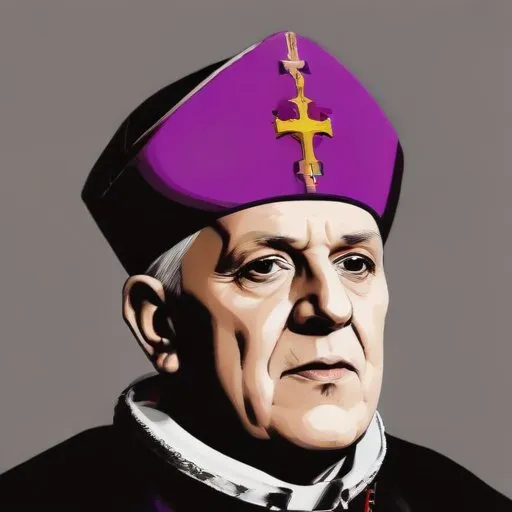
A 10th-century Archbishop of Cologne who played a key role in shaping the Holy Roman Empire's politics and was a patron of the arts. He's remembered for his diplomatic efforts and cultural achievements.
Ruprecht, also known as Ruprecht III, was the King of Germany and King of the Romans from 1400 to 1410, making him one of the most influential figures of the Late Middle Ages. With his reign marked by power struggles, wars, and dynastic rivalries, Ruprecht remains an enigmatic figure, shrouded in mystery and controversy.
Ruprecht was born in 1352 in Amberg, Upper Bavaria, to Frederick III, Duke of Bavaria, and Madeline of Velden. His early life was marked by family feuds and territorial disputes, which would set the stage for his later reign. Ruprecht's ascent to power was slow but calculated, as he navigated the complex web of alliances and rivalries between the Wittelsbach and Luxembourg dynasties.
In 1398, Ruprecht was elected as the King of the Romans, a title that made him the designated successor to the Holy Roman Emperor. However, his reign was marked by constant power struggles, as he faced opposition from rival claimants and nobles. Ruprecht's reign was also characterized by his involvement in the Venetian War, a conflict that pitted the German cities against the Venetian Republic.
Ruprecht was a patron of the arts and learning, and his court attracted scholars and intellectuals from across Europe. He was particularly interested in the works of Aristotle and Thomas Aquinas, which shaped his views on governance and the role of the monarch. Ruprecht's philosophical contributions lay in his attempts to reconcile the tensions between the papacy and the Holy Roman Empire, which had been a source of conflict for centuries.
Ruprecht's reign marked a pivotal moment in German history, as he navigated the complex web of alliances and rivalries that would shape the centuries to come. His patronage of the arts and learning helped to establish the University of Heidelberg, one of Germany's oldest and most prestigious institutions. Ruprecht's legacy can be seen in the continued struggles for power and influence that characterize modern German politics.
Ruprecht's reign was marked by controversy and public perception. His involvement in the Venetian War and his power struggles with rival claimants led to criticism and opposition from nobles and the papacy. Ruprecht's later years were marked by increasing isolation and declining health, which further eroded his public image.
Ruprecht's enigmatic legacy continues to fascinate historians and scholars, offering a glimpse into the complex and often treacherous world of medieval politics. Despite the controversies and power struggles that marked his reign, Ruprecht remains an important figure in German history, a testament to the enduring power of ambition and the human desire for influence.
Born in 1013
A medieval polymath who made significant contributions to music, mathematics, and astronomy, creating influential works on Gregorian chant and astronomical tables.
