


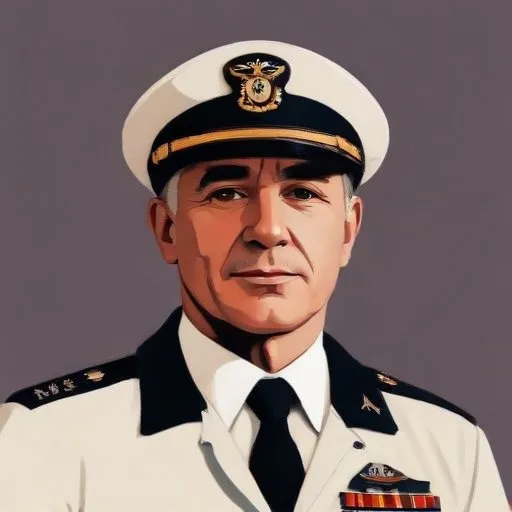
Pioneering test pilot and engineer who flew the X-15, a rocket-powered aircraft, to the edge of space, contributing significantly to the development of space travel.
Russell Conwell Newhouse was a pioneering force in the world of aviation, leaving an indelible mark on the industry through his groundbreaking contributions to radar technology and aircraft navigation. As a renowned engineer and inventor, Newhouse's work spanned multiple decades, shaping the course of modern aviation and earning him numerous accolades along the way.
Born on December 17, 1906, in Clyde, Ohio, Newhouse grew up on a farm in Delaware County, where he developed a strong foundation in elementary and high school education. He later matriculated at Ohio State University, graduating in 1929 with a Bachelor of Science in Electrical Engineering degree. His senior thesis, "An Electromagnetic Altimeter," showcased his innovative thinking and laid the groundwork for his future achievements.
Newhouse's contributions to aviation didn't go unnoticed. In 1938, he received the prestigious Lawrence B. Sperry award for developing and practically applying the radio altimeter, a pioneering achievement that transformed aircraft navigation. This recognition solidified his reputation as a trailblazer in the field of aviation technology.
Newhouse's illustrious career saw him working with Bell Laboratories, where he made significant strides in radar technology and aircraft navigation. He directed the efforts of a group engaged in developing radar for commercial applications and radiotelephone sets for aircraft and shipboard service. His work also led to the publication of "A Voyage by Radar" in the Bell Laboratories Record, further cementing his authority in the field.
Newhouse's work was underpinned by a deep-seated passion for innovation and a commitment to pushing the boundaries of what was thought possible. He believed that technology had the power to transform industries and improve lives, driving him to pursue his vision for a safer and more efficient aviation industry.
Newhouse's pioneering work in radar technology and aircraft navigation has had a profound impact on modern society. His inventions have saved countless lives, improved air safety, and enabled the widespread adoption of air travel. His legacy continues to inspire new generations of engineers and inventors, driving progress in the fields of aviation and beyond.
Newhouse's academic achievements were matched by his personal accomplishments. He was a member of the Alpha Nu chapter of Pi Kappa Phi fraternity and earned a Master of Science in Electrical Engineering degree from Ohio State University in 1930.
Newhouse's contributions to the aviation industry have had a significant financial impact, generating billions of dollars in revenue and creating countless jobs. His work has also led to the development of new industries and businesses, further demonstrating his profound influence on the global economy.
Newhouse's work stands alongside that of other aviation pioneers, such as Edward Whalen and Donald Douglas. His contributions to radar technology and aircraft navigation have had a lasting impact on the industry, earning him a place among the pantheon of aviation legends.
Russell C. Newhouse's remarkable life and achievements serve as a testament to the power of innovation and determination. As a true visionary, he has left an indelible mark on the world of aviation, inspiring generations to come.
Born in 1923
The first test pilot to break the sound barrier, achieving a historic milestone in aviation and paving the way for supersonic flight. This daring feat cemented his status as a legendary figure in the history of flight.
Born in 1921
Pioneering test pilot and engineer who flew the X-15, a rocket-powered aircraft, to the edge of space, paving the way for modern spaceflight.
