


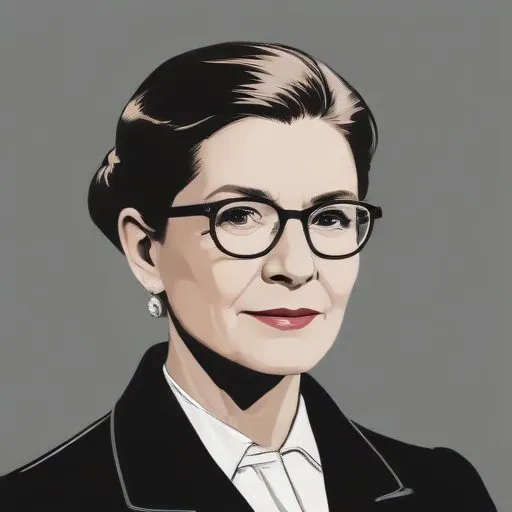
Pioneering limnologist who developed the diatom index, a method to measure water pollution by analyzing algae in freshwater ecosystems. Her work significantly impacted environmental science and conservation.
Ruth Patrick is renowned for her groundbreaking contributions to the fields of botany and limnology, particularly in the study of diatoms and freshwater ecology. With over 200 scientific papers to her name, she revolutionized the way we measure the health of freshwater ecosystems and established numerous research facilities throughout her illustrious career.
Born on November 26, 1907, to Frank Patrick, a banker, and lawyer, Ruth's fascination with diatoms and ecology was sparked by her father's hobbyist pursuits. He would often take Ruth and her sister on Sunday afternoon excursions to collect specimens from streams, igniting a lifelong passion in her. This early exposure led Ruth to attend the Sunset Hill School in Kansas City, Missouri, and later, Coker College in Hartsville, South Carolina.
However, it was her father's arrangement for her to attend summer courses that ensured she received a satisfactory education in the sciences. Ruth eventually enrolled in the University of Virginia, earning her master's degree in 1931 and PhD in 1934.
Ruth Patrick's contributions to science were recognized with numerous awards and honors, including the National Medal of Science, the highest scientific honor in the United States. She was also awarded the Tyler Prize for Environmental Achievement and the A.C. Redfield Lifetime Achievement Award.
Ruth believed that understanding the natural world was essential to addressing environmental issues. Her work focused on developing ways to measure the health of freshwater ecosystems, emphasizing the importance of preserving these vital resources.
Ruth Patrick's pioneering work in botany and limnology has left an indelible mark on the scientific community. Her dedication to understanding and preserving freshwater ecosystems continues to inspire new generations of researchers and scientists.
Throughout her remarkable career, Ruth Patrick demonstrated an unwavering commitment to her craft, pushing the boundaries of human knowledge and leaving behind a lasting legacy that continues to inspire and educate us today.
"I remember the feeling I got when my father would roll back the top of his big desk in the library and roll out the microscope... it was miraculous, looking through a window at the whole other world."
This quote captures the sense of wonder and awe that drove Ruth Patrick's lifelong pursuit of scientific discovery and her passion for understanding the natural world.
Ruth Patrick's remarkable life and achievements serve as a testament to the power of dedication, hard work, and a passion for discovery. Her contributions to science continue to inspire and educate us, ensuring her legacy will endure for generations to come.
Born in 1887
Pioneering ecologist and author who advocated for land ethics and conservation, inspiring a new generation of environmentalists.
Born in 1907
Pioneering biologist and environmentalist who exposed the dangers of pesticides and inspired the modern environmental movement through her groundbreaking book "Silent Spring".
Born in 1890
Pioneering journalist and conservationist who crusaded to preserve the Florida Everglades, earning her the title "Grand Dame of the Everglades."
Born in 1838
A pioneering conservationist and writer who advocated for the preservation of America's wilderness and national parks, inspiring generations to appreciate and protect the natural world.
Born in 1817
A 19th-century thinker who advocated for simple living, civil disobedience, and individualism, inspiring generations to reevaluate their relationship with nature and society.
