


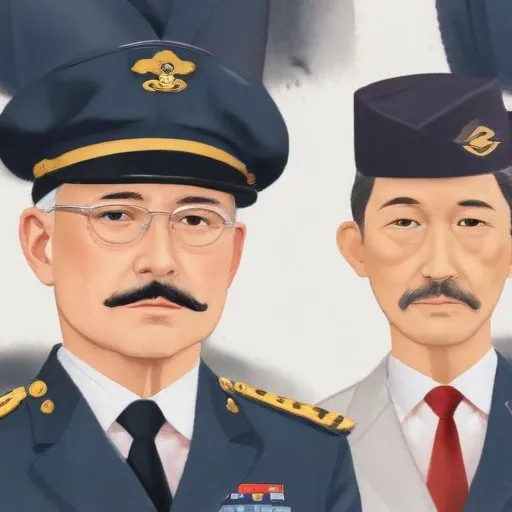
A Japanese colonel who played a key role in the country's early 20th-century military modernization and later became a successful businessman, known for his efforts to promote Japanese-German relations.
Ryz Sejima was a Japanese army officer and business leader, known for his instrumental role in shaping Japan's post-war economy and his remarkable journey from prisoner of war to corporate success. His legacy is marked by his diplomatic efforts, innovative business strategies, and his ability to bridge the gap between East and West.
Born on December 9, 1911, in Toyama, Japan, Sejima was the son of Rytar Sejima, an officer in the Imperial Japanese Army who served under General Maresuke Nogi during the Russo-Japanese War. This upbringing instilled in him a sense of discipline and strategic thinking, which would later serve him well in his military and business careers.
Sejima graduated from The Army War College (Rikugun Daigaku) in 1938 and went on to serve as a staff officer at the Imperial Headquarters during the Pacific War. He played a crucial role in developing strategies for Guadalcanal and New Guinea, and in 1945, he negotiated Japan's ceasefire with Soviet General Aleksandr Vasilevsky as a staff officer in the Kwantung Army.
Following Japan's surrender in 1945, Sejima was taken prisoner by the Soviet Union and detained for 11 years in Siberia. During his imprisonment, he was briefly flown to Tokyo in 1946 to testify at the International Military Tribunal for the Far East. This experience had a profound impact on Sejima, and later in life, he would return to Khabarovsk, where he was imprisoned, to inscribe a memorial stone at the Peace Park.
Upon his return from Siberia, Sejima joined C. Itoh Co. (now Itochu Corporation) in 1958, where he initially worked in the aircraft trading business. His leadership skills and strategic thinking quickly propelled him to the role of director in 1962, and he went on to lead the corporate planning team at C. Itoh.
Sejima implemented militaristic-style reporting methods and formed a group of followers within the company known as the "Sejima machine." He played a key role in Itoh's expansion into the oil industry and arranged an alliance between General Motors and Isuzu in 1971. Sejima was also instrumental in Itoh's entry into the People's Republic of China in 1972, making it one of the first Japanese companies to do business with the newly opened market.
Ryz Sejima's remarkable journey from war to business leadership serves as a testament to his resilience, adaptability, and innovative thinking. His contributions to Japan's post-war economy, his role in shaping the country's business landscape, and his ability to bridge cultural divides have left a lasting impact on modern society.
Ryz Sejima's life is a testament to the power of human spirit, and his remarkable story continues to inspire and motivate people to this day.
Born in 1891
A Japanese politician who served as Prime Minister during World War II, known for his role in leading Japan into the war and his attempts to negotiate a peace settlement. He is also infamous for his involvement in the Nanjing Massacre.
