


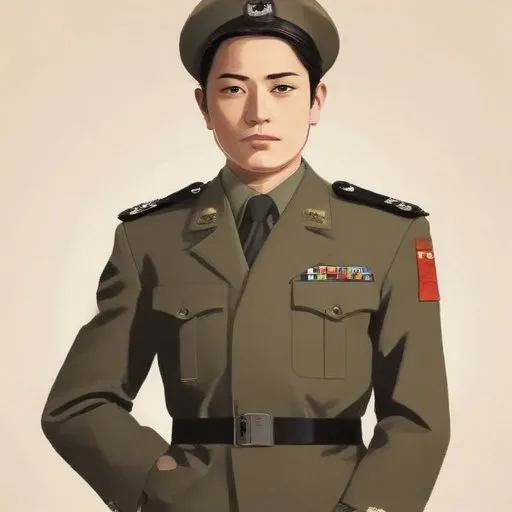
A Japanese politician who served as Prime Minister during World War II, known for his role in leading Japan into the war and his attempts to negotiate a peace settlement. He is also infamous for his involvement in the Nanjing Massacre.
Fumimaro Konoe is prominently remembered as the Prime Minister of Japan who oversaw the country's invasion of China in 1937 and its subsequent slide into totalitarianism. His terms in office, from 1937 to 1939 and 1940 to 1941, were marked by significant events that forever altered the course of Japanese history and its relations with the world.
Born on October 12, 1891, in Tokyo, Japan, Fumimaro Konoe hailed from a prominent aristocratic family. He was destined for greatness, taking up his father's seat in the House of Peers of the Imperial Diet in 1916. Konoe's diplomatic skills were first showcased as a member of the Japanese delegation at the Paris Peace Conference in 1919.
In 1933, Konoe assumed the presidency of the House of Peers, setting the stage for his eventual appointment as Prime Minister in 1937. The Marco Polo Bridge Incident, which occurred just a month after his appointment, escalated into full-scale warfare between Japan and China. Konoe's leadership during this period saw Japan secure several victories, but at a great cost. He pushed through the State General Mobilization Law, placing the country on wartime footing and paving the way for its transformation into a totalitarian state.
Konoe's political ideology was deeply rooted in his belief in the need for a strong, centralized state. He envisioned a Japan that was self-sufficient and dominant in East Asia, which led him to support the invasion of China and the subsequent expansion of Japanese territory. However, his rigid stance on these issues ultimately contributed to his downfall and Japan's subsequent involvement in World War II.
Konoe's legacy continues to be felt in modern Japan, with his policies and decisions still influencing the country's relationships with its neighbors and the world at large. His role in shaping Japan's political landscape during the tumultuous 1930s and 1940s serves as a cautionary tale about the dangers of unchecked power and the importance of diplomacy in international relations.
Konoe's life was marked by significant personal milestones, including his appointment as Prime Minister in 1937 and his eventual resignation in 1939. His re-appointment as Prime Minister in 1940 marked the beginning of his second term, which was cut short by his resignation in 1941.
Konoe's life and career must be viewed within the context of the tumultuous 1930s and 1940s, a period marked by rising nationalism, militarism, and totalitarianism. His legacy serves as a reminder of the devastating consequences of unchecked ambition and the importance of responsible leadership.
Konoe's mentor, Saionji Kinmochi, played a significant role in his early political career, recommending him for the position of Prime Minister in 1937. Konoe's relationships with other prominent Japanese leaders, including Emperor Hirohito, were instrumental in shaping his policies and decisions.
Born in 1901
The Japanese emperor who ruled from 1926 to 1989, leading the country through World War II and its post-war reconstruction, and is known for his symbolic role in Japanese politics and culture. He is also remembered for his rare public apology for Japan's wartime atrocities.
Born in 1879
A Japanese field marshal and politician who served as the 48th Minister of War, playing a significant role in World War II and later facing trial for war crimes. He was a prominent figure in Japan's military and political circles during a tumultuous period in history.
