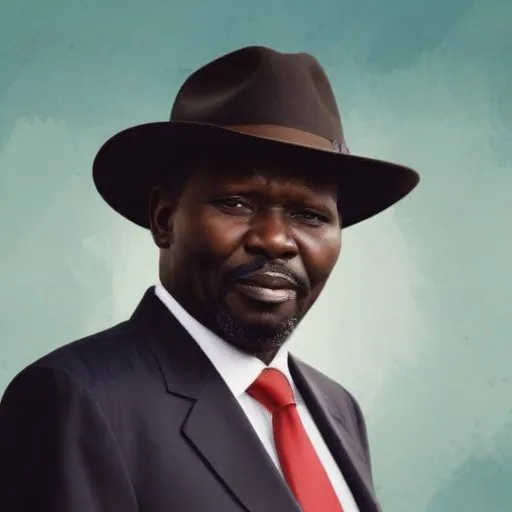
Salva Kiir Mayardit: The Pioneering President of South Sudan
A Leader in Turbulent Times
Salva Kiir Mayardit, the first President of South Sudan, has been a prominent figure in the country's struggle for independence and development since its inception. As a seasoned politician and military leader, Kiir has navigated the complexities of South Sudan's turbulent past, playing a crucial role in shaping the nation's destiny.
Early Life and Rebellion
Born on September 13, 1951, in the village of Akon, Gogrial County, South Sudan, Kiir hails from a pastoral Dinka family. His father, Kuethpiny Thiik Atem, was a cattle herder, and his mother, Awiei Rou Wol Tong, was a farmer. Kiir's early life was marked by the tumultuous First Sudanese Civil War, which sparked his involvement in the Anyanya rebellion in the late 1960s.
Rise to Prominence
Kiir's leadership skills and military prowess led to his association with the Sudan People's Liberation Army (SPLA) and the Sudan People's Liberation Movement (SPLM). Following the death of
John Garang in 2005, Kiir became the Commander-in-Chief of the SPLA and eventually succeeded Garang as the President of the Government of Southern Sudan and First Vice President of Sudan.
Presidency and Independence
Kiir's leadership was instrumental in achieving South Sudan's independence on July 9, 2011, following a referendum in which an overwhelming majority of South Sudanese voted in favor of secession. As the inaugural President of South Sudan, Kiir has worked to consolidate power, address internal conflicts, and build international relationships.
Philosophical Contributions and Beliefs
Kiir's leadership philosophy is rooted in his commitment to the principles of democracy, equality, and justice. He has emphasized the importance of national unity, reconciliation, and economic development. Kiir's beliefs are also shaped by his experiences as a rebel leader and his firsthand understanding of the devastating effects of war.
Personal Milestones and Key Life Events
- 1951: Born in Akon, Gogrial County, South Sudan
- Late 1960s: Joined the Anyanya rebellion
- 1983: Joined the Sudan People's Liberation Army (SPLA)
- 2005: Became Commander-in-Chief of the SPLA and President of the Government of Southern Sudan
- 2010: Won reelection as President of the Government of Southern Sudan
- 2011: Became the inaugural President of South Sudan
Influence on Modern Society
Kiir's presidency has had a profound impact on modern South Sudanese society. He has worked to establish a stable government, promote national reconciliation, and address the country's pressing development challenges. Kiir's leadership has also influenced regional and international relations, as South Sudan navigates its place in the global community.
Career Highlights and Major Works
- Leading the Sudan People's Liberation Army (SPLA)
- Negotiating the Comprehensive Peace Agreement (CPA)
- Presiding over South Sudan's independence referendum
- Establishing the Government of South Sudan
Controversies and Public Perception
Kiir's presidency has been marked by controversy, including allegations of corruption, human rights abuses, and authoritarianism. His government has faced criticism for its handling of internal conflicts, particularly the South Sudanese Civil War. Despite these challenges, Kiir remains a highly influential figure in South Sudanese politics.
Quotes and Memorable Sayings
- "We will not be deterred by the challenges we face. We will rise above them and build a nation that is worthy of our people."
- "Our independence is not a gift from anyone; it is a right that we have fought for and earned."
Historical Context and Legacy
Salva Kiir Mayardit's presidency is inextricably linked to the complex and often tumultuous history of South Sudan. As the first President of the world's newest nation, Kiir's leadership has been instrumental in shaping the country's trajectory. His legacy will be remembered as a testament to the resilience and determination of the South Sudanese people.
Comparative Analysis with Contemporaries
Kiir's leadership style and legacy can be compared to those of other prominent African leaders, such as
Nelson Mandela and Yoweri Museveni. Like these leaders, Kiir has navigated the complexities of post-colonial Africa, grappling with the challenges of nation-building, economic development, and regional security.
Impact on Pop Culture
Kiir's presidency has had a significant impact on South Sudanese popular culture, inspiring a sense of national pride and identity. His leadership has been commemorated in music, art, and literature, reflecting the hopes and aspirations of the South Sudanese people.
Awards and Honors
- Doctor of Laws (Honoris Causa) from the University of Juba
- Grand Cordon of the Order of the Nile (Egypt)
Charitable Work and Social Contributions
Kiir has been involved in various charitable initiatives, focusing on education, healthcare, and poverty reduction. His government has established programs to support vulnerable populations, including refugees, internally displaced persons, and marginalized communities.
Inspirational Stories and Motivations
Kiir's life is a testament to the power of perseverance and determination. From his humble beginnings as a cattle herder to his rise as a national leader, Kiir's story serves as an inspiration to the people of South Sudan and beyond.
FAQ
What is Salva Kiir Mayardits role in South Sudans independence?
Salva Kiir Mayardit played a crucial role in South Sudans struggle for independence, serving as the chairman of the Sudan Peoples Liberation Army (SPLA) and later becoming the first President of South Sudan. He led the country to independence in 2011.
What are Salva Kiir Mayardits accomplishments as President of South Sudan?
Under his leadership, Salva Kiir Mayardit has implemented several development projects, including the construction of roads, bridges, and healthcare facilities. He has also worked to promote national unity and reconciliation in the country.
What is Salva Kiir Mayardits early life and education?
Salva Kiir Mayardit was born in 1951 in Bahr el Ghazal, Sudan. He received his early education in Sudan and later studied at the University of Juba. He joined the SPLA in 1983 and rose through the ranks to become its chairman.
What are Salva Kiir Mayardits challenges as President of South Sudan?
Salva Kiir Mayardit has faced several challenges as President, including managing the countrys oil resources, dealing with internal conflicts, and addressing human rights abuses. He has also had to navigate complex international relations, including with neighboring countries and global organizations.
What is Salva Kiir Mayardits stance on human rights?
Salva Kiir Mayardit has faced criticism for human rights abuses during his presidency, including allegations of violence against civilians and suppression of political opponents. He has pledged to address these concerns and promote respect for human rights in South Sudan.