


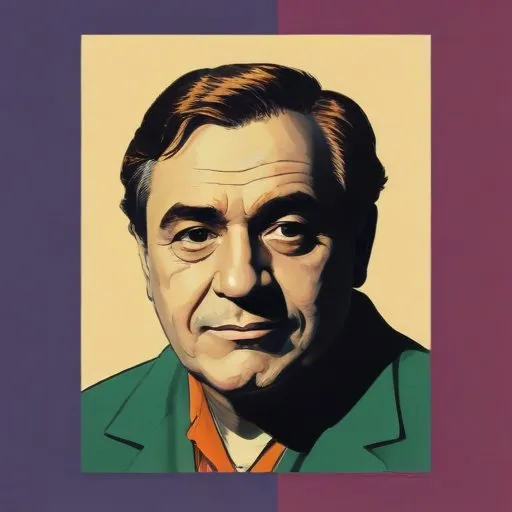
An Italian writer who crafted powerful, symbolic poetry and novels that explored the human condition, earning him the Nobel Prize in Literature in 1959.
Salvatore Quasimodo, a renowned Italian poet and translator, is celebrated for his lyrical poetry that embodies the tragic experience of life in the modern era. Awarded the 1959 Nobel Prize in Literature, Quasimodo's work is characterized by its classical fire, imbuing his poetry with a sense of depth and introspection.
Born on August 20, 1901, in Modica, Sicily, Quasimodo spent his childhood in Roccalumera, where he was deeply affected by the natural forces that shaped his surroundings. The devastating earthquake that struck Messina in 1908, which led to his family's relocation, left an indelible mark on the young poet's psyche.
Quasimodo's father, Gaetano Quasimodo, introduced him to the Scottish Rite Freemasonry, which would later have a profound impact on his worldview. This exposure, coupled with his fondness for classical literature, laid the foundation for his unique poetic style.
In 1917, Quasimodo founded the short-lived Nuovo giornale letterario (New Literary Journal), where he published his first poems. This initial foray into the world of literature marked the beginning of a lifelong dedication to his craft.
Quasimodo's move to Rome in 1919, to pursue engineering studies, was cut short due to financial constraints. Instead, he worked as a technical draughtsman, all while continuing to hone his writing skills. During this period, he collaborated with various reviews and delved into the study of Greek and Latin literature.
In 1929, Quasimodo relocated to Florence, where he was introduced to the city's thriving literary circle. It was here that he befriended poets Alessandro Bonsanti and Eugenio Montale, among others. This period marked a significant turning point in his career, as he became increasingly drawn to the hermetic movement.
In 1930, Quasimodo published his first collection, Acque e terre (Waters and Earths), which showcased his unique poetic voice. The work was met with critical acclaim, establishing him as a rising star in the Italian literary landscape.
Quasimodo's Nobel Prize in Literature in 1959 was a testament to his contribution to the world of poetry. His work, characterized by its ability to express the tragic experience of life in the modern era, continues to resonate with readers worldwide.
Today, Quasimodo is remembered as one of the most influential Italian poets of the 20th century, alongside Giuseppe Ungaretti and Eugenio Montale. His poetry, marked by its classical fire and introspective depth, remains a powerful exploration of the human experience.
Quasimodo's involvement with the Scottish Rite Freemasonry had a profound impact on his worldview and poetic style. His father, a member of the Masonic Lodge Arnaldo da Brescia, introduced him to the fraternity, which Quasimodo went on to support throughout his life.
The Grand Orient of Italy has recognized Quasimodo as one of its most notable brothers, a testament to his commitment to the Masonic principles of brotherly love and intellectual curiosity.
Salvatore Quasimodo's contribution to modern Italian literature is immeasurable. His poetry, marked by its classical fire and introspective depth, has inspired generations of writers and readers alike.
Today, Quasimodo's work remains a powerful exploration of the human experience, a testament to the enduring power of poetry to express the complexities of the human condition.
Born in 1888
An Egyptian-Italian soldier, journalist, and poet who explored the human condition through surreal and symbolic verse, influencing 20th-century modernist poetry. His work is a testament to the power of language in capturing the essence of war and existence.
Born in 1896
A renowned Italian poet and translator, celebrated for his unique and expressive style that explores the human condition, earning him the Nobel Prize in Literature.
Born in 1923
A renowned Italian writer, celebrated for his imaginative and philosophical fiction, often blending fantasy and reality, leaving a lasting impact on modern literature.
94 Years Old
A renowned Italian intellectual who wrote bestselling novels like "The Name of the Rose" and "Foucault's Pendulum", blending mystery, history, and philosophy, while also being a prominent literary critic and philosopher.
Born in 1919
An Italian chemist and author who survived Auschwitz and wrote powerful memoirs about his experiences, including "If This Is a Man" and "The Truce".
Born in 1908
An Italian poet and novelist who explored themes of existentialism, morality, and the human condition through his lyrical and introspective writing, leaving a lasting impact on 20th-century literature.
Born in 1907
A prominent Italian journalist and author, known for his novels that explored the human condition, often focusing on themes of alienation, morality, and the bourgeoisie. His works are considered significant contributions to 20th-century Italian literature.
