


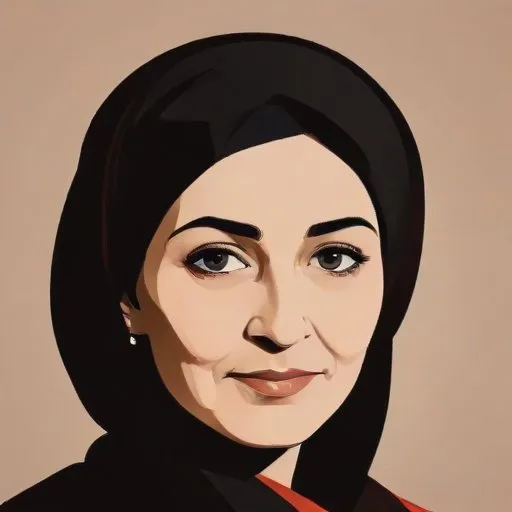
A Turkish mystic and author who wrote extensively on Sufism and Islamic mysticism, leaving a lasting impact on Turkish literature and spiritual thought.
Samiha Ayverdi, a prominent Turkish writer, is renowned for her extensive literary works, which seamlessly blended Sufi philosophy with historical narratives. Born on November 25, 1905, in Istanbul, Ayverdi's literary career spanned over five decades, leaving an indelible mark on Turkish literature.
Ayverdi's educational background was steeped in philosophy and Islamic mysticism, which would later shape her writing style. Her brother, Ekrem Hakk Ayverdi, an architect and historian, was a significant influence on her early life. In 1938, she published her debut novel, Ak Budur, which marked the beginning of a prolific literary career.
Ayverdi's work is deeply rooted in Sufism, a mystical branch of Islam. Her writing often explored the intersection of Sufi thought and history, showcasing her unique blend of philosophical and literary expertise. Ayverdi's fascination with Kenan Rifai, a Sufi thinker, significantly influenced her work, and she later became his official successor.
Ayverdi's literary oeuvre comprises over 30 novels and short story collections. Some of her notable works include The Unsinkable Day, Man and the Devil, and brahim Efendi Mansion, which has been listed as one of the 100 Essential Works. Her writing often revolved around Istanbul, seamlessly weaving together history, philosophy, and fiction.
Ayverdi's literary contributions have had a lasting impact on Turkish literature and intellectual circles. Her work has inspired a new generation of writers, thinkers, and philosophers, cementing her legacy as a guardian of Sufi thought and Turkish cultural heritage.
Ayverdi's life was marked by significant personal milestones, including her succession as the official successor of Kenan Rifai. Her brother, Ekrem Hakk Ayverdi, played a crucial role in shaping her early life and intellectual pursuits. Ayverdi passed away on March 22, 1993, and is buried at the Merkezefendi Cemetery in Zeytinburnu, Istanbul.
Samiha Ayverdi's enduring legacy lies in her remarkable literary contributions, which continue to inspire and influence Turkish literature and intellectual discourse. Her work serves as a testament to the power of Sufi thought, historical narratives, and philosophical inquiry, solidifying her position as one of Turkey's most revered writers.
"The past is not just a memory, but a living, breathing entity that shapes our present and future." - Samiha Ayverdi
Born in 1207
A 13th-century Persian poet and Sufi mystic who wrote spiritual and romantic poetry that explores the nature of love, spirituality, and the human condition. His works have transcended time and cultures, inspiring countless readers and seekers.
Born in 1165
A 13th-century Andalusian Sufi mystic, poet, and philosopher who wrote extensively on spirituality, mysticism, and the nature of reality, influencing Islamic thought and Western philosophy. Their works are still studied and revered today.
