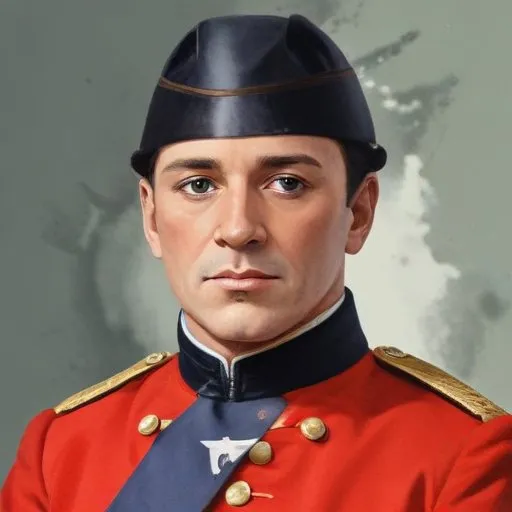
Samuel Penhallow: The Colonial Historian and Militia Leader
A Life of Service and Scholarship
Samuel Penhallow, born on July 2, 1665, in St Mabon, Cornwall, England, is best known for his contributions as a historian, militia leader, and public servant in present-day Maine during Queen Anne's War and Father Rale's War. His most notable work, "The History of the Wars of New England with the Eastern Indians," is a testament to his dedication to documenting the complexities of colonial life and conflict.
Early Life and Education
Penhallow's educational background was shaped by his time at a school in Newington Green, near London, under the tutelage of Rev.
Charles Morton, a dissenting clergyman. This experience not only influenced his future work but also led to his emigration to Massachusetts in 1686 alongside Morton.
Rise to Prominence
Penhallow's relocation to Portsmouth, New Hampshire, marked the beginning of his rise to prominence. His marriage to Mary Cutt, daughter of John Cutt, president of the Province of New Hampshire, brought him into possession of considerable property, including much of the present site of Portsmouth. He became an influential figure in the region, serving as speaker of the Assembly in 1700, a member of the Provincial Council in 1702, and later as chief justice of the superior court of judicature from 1717 until his death.
Military and Public Service
As a militia leader, Penhallow played a pivotal role in the defense of Fort Menaskoux during the Northeast Coast Campaign of 1724. His service was marked by dedication and bravery, cementing his reputation as a loyal and capable leader. In addition to his military duties, Penhallow held various public offices, including treasurer of the province (1699-1726) and Secretary of the province (1714-1726).
Historical Contributions
Penhallow's most enduring legacy is his historical work, "The History of the Wars of New England with the Eastern Indians." This comprehensive account of colonial conflicts and Indian relations provides valuable insights into the complexities of the time. The work remains a significant resource for historians and scholars, offering a unique perspective on the era.
Personal Milestones and Legacy
Throughout his life, Penhallow navigated the complexities of colonial politics and conflict, earning a reputation as a leader, historian, and public servant. His life was marked by significant milestones, including his appointment as chief justice of the superior court of judicature and his service as treasurer and Secretary of the province. Penhallow passed away on December 2, 1726, at Portsmouth, leaving behind a rich legacy that continues to shape our understanding of colonial America.
Impact on Modern Society
Penhallow's historical work and public service have had a lasting impact on modern society. His documentation of colonial conflicts and Indian relations provides a nuanced understanding of the era, informing our perspective on the complexities of cultural exchange and conflict. His life and work serve as a testament to the importance of historical scholarship and the role of dedicated public servants in shaping the course of history.
Trivia and Fun Facts
- Penhallow's work, "The History of the Wars of New England with the Eastern Indians," was reprinted in 1859 and remains a valuable resource for historians and scholars.
- He was commissioned by the Society for the Propagation of the Gospel in New England to study Indian languages and preach to the Indians, but was soon diverted from this work.
FAQ
What was Samuel Penhallows role in the colonial wars?
Samuel Penhallow was a soldier and historian who played a significant role in the colonial wars, including King Williams War and Queen Annes War. He fought against the French and Native Americans in North America.
What is Samuel Penhallows most notable work?
Samuel Penhallows most notable work is his book The History of the Wars of New-England with the Eastern Indians, which provides a detailed account of the colonial wars in New England.
What was Samuel Penhallows early life like?
Samuel Penhallow was born in England in 1665 and migrated to New England with his family at a young age. He grew up in a Puritan family and was educated at Harvard College.
How did Samuel Penhallow contribute to the history of New England?
Samuel Penhallows writings provide valuable insights into the history of New England during the colonial era. His book is considered one of the most important sources of information on the wars with the Native Americans.
What is Samuel Penhallows legacy?
Samuel Penhallows legacy is that of a soldier, historian, and chronicler of the early history of New England. His work remains an important resource for historians and scholars today.