


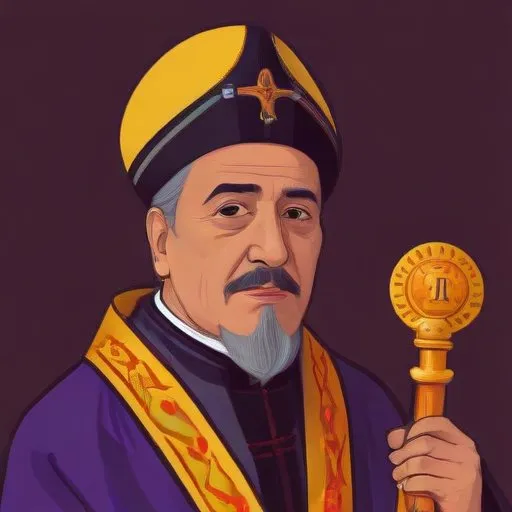
A champion of indigenous rights and liberation theology, he advocated for the poor and marginalized in Mexico's Chiapas region, inspiring a new generation of social activists.
Samuel Ruiz, a Mexican Catholic prelate, is best known for his courageous role as a mediator between the Zapatista Army of National Liberation (EZLN) and the Institutional Revolutionary Party (PRI) during the Chiapas conflict in the 1990s. Through his tireless efforts, Ruiz helped to broker a peace agreement, bringing hope and relief to the indigenous Maya communities of Chiapas, who had long been marginalized and disadvantaged.
Ruiz was born on November 3, 1924, in Guanajuato, Mexico, to a modest family of Guadalupe García and Maclovio Ruiz Mejía. Growing up during the Cristero War, a time of persecution against the Catholic Church in Mexico, Ruiz's family instilled in him a strong faith and sense of social justice.
At the age of 15, Ruiz completed his high school and seminary studies at León in Guanajuato. He then continued his studies at the Jesuit Gregorian University in Rome, where he earned his doctorate in Sacred Scripture in 1952.
In 1949, Ruiz was ordained as a priest and returned to Guanajuato to teach at the León seminary. In 1960, he was consecrated as the bishop of the Diocese of San Cristóbal de las Casas in Chiapas, Mexico, a position he held until his retirement in 2000.
As bishop, Ruiz championed the cause of the indigenous Maya people of Chiapas, who were among Mexico's poorest and most marginalized communities. Inspired by Liberation Theology, which emphasized the Church's role in promoting social justice and human dignity, Ruiz's diocese provided support and services to hundreds of thousands of indigenous people.
In the 1990s, Ruiz played a crucial role in mediating the conflict between the EZLN and the PRI. Through his efforts, he helped to facilitate dialogue and negotiations, eventually leading to the San Andrés Accords in 1996, which aimed to recognize the rights and autonomy of indigenous peoples in Mexico.
Ruiz's work as a peacemaker was not without controversy, however. He faced criticism from the Mexican government and some within the Catholic Church for his close ties to the Zapatista movement and his perceived leftist leanings.
Samuel Ruiz's legacy extends far beyond his role as a bishop and mediator. He inspired a generation of social activists and human rights defenders, and his commitment to social justice and human dignity continues to inspire people around the world.
Today, Samuel Ruiz is remembered as a champion of the poor and marginalized, and his tireless efforts to promote peace, justice, and human dignity continue to inspire and motivate people around the world.
Born in 1920
Leader of the Catholic Church from 1978 to 2005, known for helping to end communism in Poland and being a charismatic advocate for human rights and social justice.
89 Years Old
The leader of the Catholic Church, known for his progressive stance on social issues and efforts to reform the Church, inspiring millions worldwide.
73 Years Old
A Haitian priest-turned-politician who served as President of Haiti, known for his advocacy for the poor and his tumultuous presidency marked by controversy and exile.
