


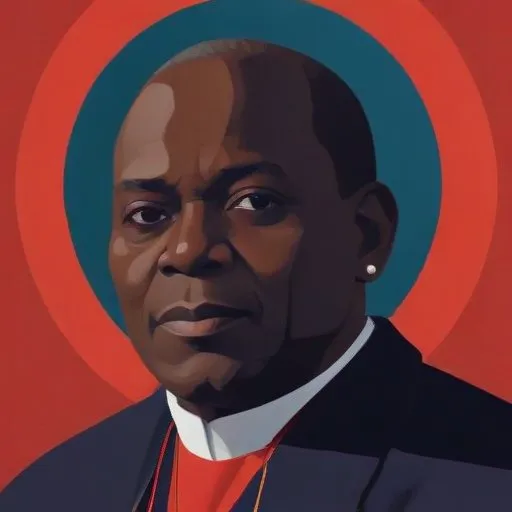
A Haitian priest-turned-politician who served as President of Haiti, known for his advocacy for the poor and his tumultuous presidency marked by controversy and exile.
Known as Haiti's first democratically elected president, Jean-Bertrand Aristide's name is synonymous with the struggle for liberation, democracy, and social justice. As a former Salesian priest, Aristide's commitment to the people of Haiti has been unwavering, earning him a reputation as a champion of the poor and marginalized.
Born on July 15, 1953, in Port-Salut, Haiti, Aristide's journey began in poverty. Orphaned at a young age, he was taken under the wing of the Salesian order, where he discovered his calling as a priest. The values of liberation theology, which emphasized the Church's role in combating social injustice, shaped Aristide's worldview.
In 1982, Aristide was appointed to a parish in Port-au-Prince, where he became a vocal advocate for democracy and human rights. Under the brutal regimes of Jean-Claude "Baby Doc" Duvalier and the military transition government, Aristide's message of hope and defiance resonated with the Haitian people.
His leadership in the pro-democracy movement led to his election as president in 1990-91, with an overwhelming 67% of the vote. Aristide's presidency marked a significant shift towards normalization of Afro-Creole culture, including the recognition of Vodou as a legitimate religion.
Aristide's presidency was cut short by a military coup in September 1991. Despite international pressure, including a US-led intervention, Aristide was forced into exile. He returned to power in 1994, only to be ousted again in 2004, amidst allegations of US involvement.
During his second exile, Aristide lived in the Central African Republic and South Africa. He finally returned to Haiti in 2011, after seven years abroad.
Aristide's commitment to the Haitian people has been unwavering. His policies, though controversial, pushed for greater economic and social equality. His influence on Haitian politics and culture is undeniable, inspiring a new generation of leaders and activists.
As a symbol of resistance, Aristide continues to inspire movements worldwide. His legacy serves as a testament to the power of people-driven change and the importance of standing up against oppression.
In addition to his presidency, Aristide is known for his poetry and writings, which reflect his passion for social justice and human rights. One of his most famous quotes is: "What I want is for Haiti to be proud of itself, to be proud of its culture, to be proud of its history."
83 Years Old
Agronomist and politician who served as President of Haiti, implementing reforms and rebuilding efforts after natural disasters. Known for his efforts to stabilize and develop the country.
65 Years Old
A Haitian musician-turned-politician who rose to fame with his kompa music before becoming the President of Haiti, known for his efforts to rebuild the country after the 2010 earthquake.
77 Years Old
A Haitian military leader who seized power in a 1991 coup, ruling the country with an iron fist until international pressure forced him to step down in 1994. He's infamous for his brutal regime and human rights abuses.
92 Years Old
The 12th Prime Minister of Haiti, who served from 2004 to 2006, is known for leading the country's interim government after a coup and attempting to stabilize the nation. He's also recognized for his efforts to organize democratic elections.
