


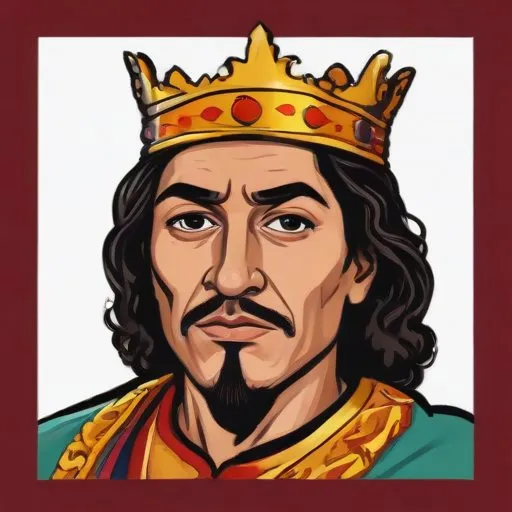
Ruling Navarre from 1150 to 1194, he strengthened the kingdom through strategic alliances and military campaigns, earning a reputation as a shrewd and powerful leader.
Sancho VI, also known as the Wise, was the King of Navarre from 1150 until his death in 1194. He is renowned for being the first monarch to officially drop the title of King of Pamplona in favor of King of Navarre, thus changing the designation of his kingdom.
Sancho VI was born on April 21, 1132, to García Ramírez, the Restorer, and Margaret of L'Aigle. He inherited a debilitated kingdom, subject to frequent raids by the Kingdom of Castile and the County of Barcelona. The Treaties of Tudején and Carrín had reduced the borders of his kingdom, which he was determined to repair.
Sancho VI reasserted royal authority by founding several towns, including San Sebastián, Vitoria, and Treviño, among others, in 1181. This move was a strategic attempt to counter the Castilian military takeover of western Navarrese territories. He also signed the Accord of Soria, confirming Castile's possession of conquered territories.
Sancho VI was hostile to Count Raymond Berengar IV of Barcelona, but his son, King Alfonso II of Aragon, divided the lands taken from Murcia with him by the treaty of Sangesa in 1168. In 1190, the two neighbors again signed a pact in Borja of mutual protection against Castilian expansion.
On July 20, 1153, Sancho VI married Sancha of Castile, daughter of Alfonso VII, King of León and Castile, and his wife Berengaria of Barcelona. They had six children, including:
Sancho VI brought his kingdom into the political orbit of Europe, and his diplomatic efforts and border expansions secured Navarre's position as a significant player in the region. He died on June 27, 1194, in Pamplona, where he is buried.
Today, Sancho VI is remembered as a wise and shrewd leader who navigated the complex web of alliances and rivalries in medieval Spain, securing a lasting legacy for the Kingdom of Navarre.
Born in 1155
King of Castile from 1158 to 1214, known for his military campaigns, particularly the Battle of Las Navas de Tolosa, which marked a significant turning point in the Reconquista.
Born in 1052
King of France from 1060 to 1108, known for his military campaigns and conflicts with the Church, particularly his excommunication by Pope Urban II.
