


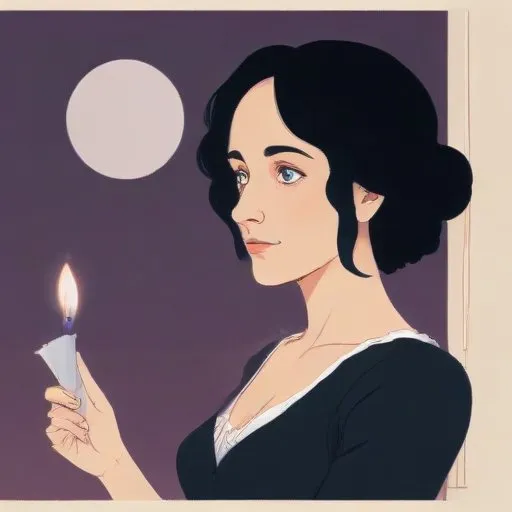
A romantic poet and essayist, known for her dark and introspective works, as well as her tumultuous relationship with Edgar Allan Poe.
Sarah Helen Whitman was an American poet, essayist, and transcendentalist, fondly remembered as the romantic interest of the enigmatic Edgar Allan Poe. Born on January 19, 1803, in Providence, Rhode Island, Whitman's literary prowess and esoteric inclinations captivated the hearts of many, including the legendary author.
Whitman was the daughter of Nicholas Power and Anna Marsh. In 1828, she married John Winslow Whitman, a poet and writer who co-edited the Boston Spectator and Ladies Album. This union allowed Sarah to publish some of her poetry under the pseudonym "Helen." Although the couple never had children, Sarah's literary career flourished, with her poetry and essays reflecting her fascination with transcendentalism and the occult.
Whitman's social circle included luminaries like Margaret Fuller and other New England intellectuals. Her interest in transcendentalism was kindled through her relationships with these individuals, as well as through lectures by Ralph Waldo Emerson in Boston and Providence. Her exploration of science, mesmerism, and the occult further solidified her position as a thinker ahead of her time.
In July 1845, Whitman's life intersected with that of Edgar Allan Poe in Providence. Poe, attending a lecture by friend and poet Frances Sargent Osgood, declined an introduction to Whitman, who was admiringly aware of his works. Despite this initial reluctance, their connection grew, with Whitman confessing to her friend Mary E. Hewitt, "I can never forget the impressions I felt in reading a story of his for the first time... I experienced a sensation of such intense horror that I dared neither look at anything he had written nor even utter his name..."
Whitman's poetry and essays reflected her deep-seated fascination with spirituality, death, and the afterlife. Her home, often adorned with mourning attire and occult symbols, was said to host séances on Sundays, where she attempted to communicate with the deceased. Her writings often explored the mysteries of existence, mortality, and the human condition.
Whitman's literary output included poetry, essays, and reviews, many of which were published in prominent journals and magazines. Her poetry collection, "Hours of Life," showcased her mastery of language and her philosophical introspections. Other notable works include "The Mysteries of the Universe" and "The Woman in Purple."
Whitman's contributions to American literature and her connections to the transcendentalist movement continue to inspire scholars and readers today. Her unique blend of spirituality, literature, and intellectual curiosity has left an indelible mark on the cultural landscape.
Sarah Helen Whitman's remarkable life, marked by her literary achievements, esoteric inclinations, and romantic entanglements, continues to captivate audiences. As a poet, essayist, and transcendentalist, she remains an enigmatic figure, forever intertwined with the storied life of Edgar Allan Poe.
Born in 1809
A master of dark and atmospheric storytelling, crafting haunting tales of mystery and horror that continue to captivate readers to this day.
Born in 1807
A celebrated poet and educator, known for his lyrical and narrative poems that often explored American history and culture, including the iconic "Paul Revere's Ride".
Born in 1803
A leading figure in the Transcendentalist movement, he advocated for individualism, self-reliance, and nature-inspired spirituality through his essays and poetry. His ideas continue to influence American thought and culture.
Born in 1830
A reclusive poet who crafted innovative, enigmatic, and emotionally charged verse that continues to captivate readers with its unique style and profound insights.
Born in 1819
A celebrated poet, essayist, and journalist who revolutionized American literature with his collection "Leaves of Grass", known for his free verse style and celebration of the human spirit.
Born in 1819
Author of epic sea tales and philosophical explorations, including the iconic "Moby-Dick", which continues to influence literature and popular culture.
Born in 1804
Author of dark, psychologically complex tales that explore the human condition, often set in 17th-century New England, and known for his masterpiece "The Scarlet Letter".
Born in 1783
Author of the iconic tales "The Legend of Sleepy Hollow" and "Rip Van Winkle", credited with creating the first American folklore and shaping the country's literary identity.
