


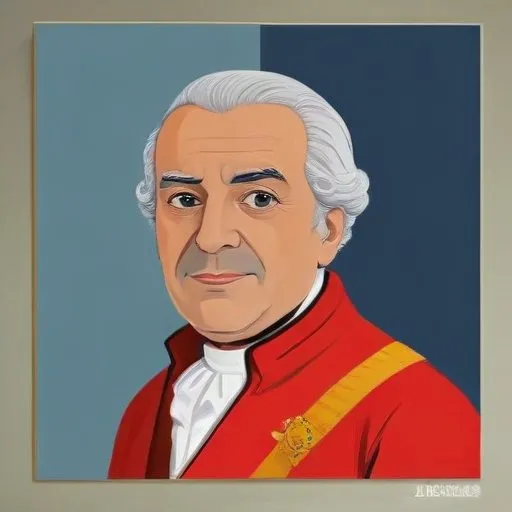
A skilled statesman who implemented sweeping reforms, modernizing Portugal's economy, education, and administration, earning him a lasting legacy as a champion of progress.
Sebastião José de Carvalho e Melo, commonly known as the Marquis of Pombal, was a Portuguese statesman and diplomat who effectively ruled the Portuguese Empire from 1750 to 1777 as chief minister to King Joseph I. He is credited with leading Portugal's recovery from the devastating 1755 Lisbon earthquake and implementing sweeping reforms that modernized the country's administrative, economic, and ecclesiastical institutions.
Born on May 13, 1699, in Soure, Portugal, Pombal was the son of a country squire and nephew of a prominent cleric. He studied at the University of Coimbra before enlisting in the Portuguese Army, where he reached the rank of corporal. After retiring from the army, Pombal returned to academic life in Lisbon, but later retreated to his family's estates in 1733 following an elopement with a nobleman's niece.
With the assistance of his uncle, Pombal secured an appointment as King John V's ambassador to Great Britain in 1738. He later served as ambassador to Austria from 1745 to 1749. When Joseph I ascended to the throne in 1750, Pombal was appointed as Secretary of State for Foreign Affairs. Despite facing opposition from the hereditary Portuguese nobility, Pombal gained the king's confidence and, by 1755, was the de facto chief minister.
The devastating earthquake that struck Lisbon on November 1, 1755, was one of the deadliest in history, killing an estimated 10,000 to 100,000 people. Pombal's decisive management of the crisis, which included maintaining public order, organizing relief efforts, and supervising the capital's reconstruction, cemented his position as the king's chief minister. The reconstruction efforts led to the development of the Pombaline architectural style, which characterized Lisbon's rebuilding.
Pombal's reforms aimed to modernize Portugal's administrative, economic, and ecclesiastical institutions. He centralized power, abolished the Council of State, and created the Ministry of Internal Affairs. Pombal also introduced the concept of a national budget, established the Bank of Portugal, and promoted the development of industry and commerce.
Pombal's autocratic style and persecution of the Portuguese lower classes earned him the nickname "Nero of Trafaria." His cruel treatment of the Jesuits, whom he accused of plotting against him, led to their expulsion from Portugal in 1759. Despite these controversies, Pombal's reforms had a lasting impact on Portugal, and he remains one of the country's most significant historical figures.
In 1760, Pombal was elevated to the rank of Marquis of Pombal and Count of Oeiras. He remained in power until 1777, when he was dismissed by Queen Maria I following the death of King Joseph I. Pombal died on May 8, 1782, at the age of 83, leaving behind a legacy of reform and modernization that continues to shape Portugal today.
Pombal's reforms and leadership occurred during the Age of Enlightenment, a time of intellectual and cultural transformation in Europe. His modernizing efforts positioned Portugal as a major player in European politics and commerce, paving the way for the country's future growth and development.
Pombal's legacy extends beyond Portugal, with his reforms and ideas influencing the development of modern states across Europe and beyond. His emphasis on centralized power, national budgeting, and economic development continue to shape governments and economies today.
| Year | Event |
|---|---|
| 1699 | Born on May 13 in Soure, Portugal |
| 1733 | Retires to family estates after eloping with a nobleman's niece |
| 1738 | Appointed as King John V's ambassador to Great Britain |
| 1745 | Appointed as ambassador to Austria |
| 1750 | Appointed as Secretary of State for Foreign Affairs |
| 1755 | Becomes de facto chief minister after the Lisbon earthquake |
| 1760 | Elevated to the rank of Marquis of Pombal and Count of Oeiras |
| 1777 | Dismissed by Queen Maria I |
| 1782 | Dies on May 8 at the age of 83 |
Born in 1889
A dictator who ruled Portugal from 1933 to 1968, implementing a corporatist authoritarian regime and maintaining a neutral stance during World War II. He's known for his economic reforms and nationalist policies.
Born in 1902
A Portuguese journalist who covered several international conflicts, including the Portuguese Colonial War and the Carnation Revolution, providing firsthand reports from the front lines.
