


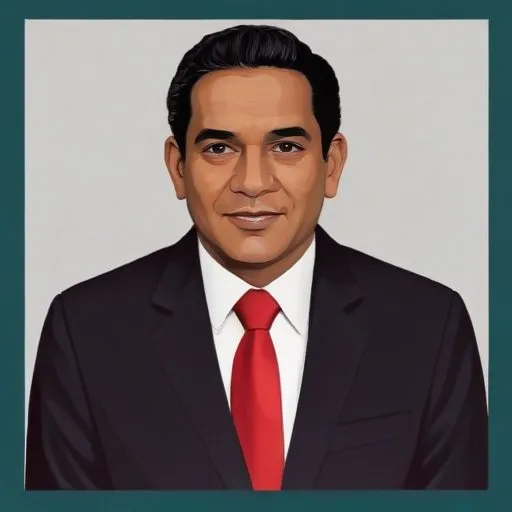
Mauritius' first Prime Minister, a key figure in the country's independence from British colonial rule, and a champion of social and economic development. He played a crucial role in shaping the nation's future.
Sir Seewoosagur Ramgoolam, affectionately referred to as Chacha Ramgoolam or SSR, is revered as the founding father of Mauritius, a physician-turned-politician who spearheaded the country's journey to independence in 1968. He served as the island's first chief minister, first prime minister, and fifth governor-general, leaving an indelible mark on the nation's history.
Ramgoolam was born on September 18, 1900, in Belle Rive, Mauritius, to a Bhojpuri-speaking Hindu Indo-Mauritian family. His father, Moheeth Ramgoolam, an Indian immigrant labourer from Bhojpur district of Bihar, had arrived in Mauritius in 1896. Ramgoolam's early years were shaped by his cultural heritage, with a strong foundation in Bhojpuri, Indian culture, and philosophy.
Ramgoolam's entry into politics was marked by his leadership of the Labour Party of Mauritius following the death of Guy Rozemont in 1956. He championed the cause of Mauritian independence, advocating for self-rule and an end to colonial rule. His tireless efforts culminated in Mauritius gaining independence on March 12, 1968.
Ramgoolam's legacy is multifaceted, with far-reaching consequences for modern Mauritius. He is credited with shaping the country's political landscape, fostering national unity, and promoting economic growth. His commitment to education, healthcare, and social welfare has had a lasting impact on the nation's development.
Ramgoolam's struggle for independence was set against the backdrop of decolonization in Africa and Asia. His leadership style and philosophy were influenced by Mahatma Gandhi's principles of non-violent resistance and Ahimsa. Comparative analysis with contemporaries such as Jawaharlal Nehru and Kwame Nkrumah highlights Ramgoolam's unique approach to nation-building and his commitment to democratic values.
Ramgoolam's philosophical outlook was shaped by his Hindu upbringing and his exposure to Indian culture. He was deeply influenced by the principles of Dharma, Ahimsa, and Karma, which guided his approach to politics and governance.
Ramgoolam's son, Dr. Navinchandra Ramgoolam, followed in his father's footsteps, serving as the third and fifth prime minister of Mauritius. The father-son duo's legacy continues to shape Mauritian politics.
Ramgoolam was knighted by Queen Elizabeth II in 1965, in recognition of his services to Mauritius. He received numerous honors and awards, including the Bharat Ratna, India's highest civilian award, in 1973.
Ramgoolam was a physician by training, with a degree from the University of London. He was known for his simplicity and humility, often preferring to travel by public transport and engage with ordinary citizens.
Ramgoolam's life and legacy have inspired numerous literary and artistic works, including films, plays, and books. He remains an iconic figure in Mauritian popular culture, symbolizing the country's struggle for independence and self-determination.
96 Years Old
Mauritius' fourth president, a lawyer-turned-politician who played a significant role in the country's transition to democracy and economic growth. He's remembered for his efforts to promote national unity and stability.
81 Years Old
The first Mauritian politician to hold the office of Prime Minister from 2003 to 2005, known for his efforts to promote economic growth and social justice in Mauritius.
85 Years Old
The second President of Mauritius, serving from 1992 to 2002, known for promoting economic growth and social justice, and playing a key role in the country's transition to democracy.
85 Years Old
The 3rd President of Mauritius, serving from 2002 to 2003, known for his brief but significant tenure in the island nation's history. He played a crucial role in maintaining stability and promoting economic growth.
96 Years Old
Mauritius' fourth president, a lawyer-turned-politician who played a significant role in the country's transition to democracy and economic growth. He's remembered for his efforts to promote national unity and stability.
