


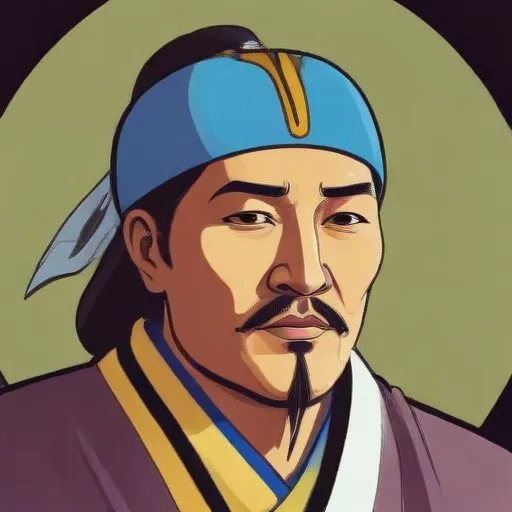
The 15th ruler of the Joseon Dynasty, who reigned from 1567 to 1608, is most known for his weak leadership during the Japanese invasions of Korea, leading to significant losses and humiliation for the kingdom. He is also remembered for his excessive reliance on eunuchs and his failure to reform the government.
Seonjo of Joseon, the 14th monarch of the Joseon dynasty of Korea, is known for promoting Confucianism and attempting reforms at the beginning of his reign, earning him the title of a "Confucian King." However, his legacy is also marred by the political discord and incompetent leadership during the Japanese invasions of Korea, which would ultimately lead to his downfall.
Seonjo was born Yi Yeon in 1552 in Hanseong, the capital of Korea, as the third son of Prince Deokheung. He was given the title of Prince Haseong and was eventually adopted by Queen Insun. When King Myeongjong died young without an heir, Prince Haseong was the next in the line of succession, and he was crowned king in 1567 at the age of 16.
During the early years of his reign, Seonjo focused on improving the lives of the common people and rebuilding the nation after the political corruption during the chaotic reign of Yeonsangun and King Jungjong. He encouraged Sarim scholars, who had been persecuted by entrenched aristocrats, and continued the political reforms of King Myeongjong. Many famous Confucian scholars, including Yi Hwang and Yi I, were appointed to key positions, and Seonjo himself studied Confucian classics and encouraged the development of Confucian education.
However, Seonjo's reign was marked by a series of catastrophic events, including the Japanese invasions of Korea, led by Toyotomi Hideyoshi. Seonjo's incompetent leadership and indecisiveness led to the capture of Hanseong and the destruction of many cities and cultural artifacts. The war effort was further hampered by factionalism and corruption within the royal court, and Seonjo's inability to make decisive decisions led to the decline of the Joseon dynasty.
Seonjo's legacy is complex and multifaceted. On one hand, he is remembered as a "Confucian King" who promoted Confucianism and encouraged education and cultural development. On the other hand, his incompetent leadership during the Japanese invasions of Korea led to catastrophic consequences for the Joseon dynasty and the Korean people. Despite his flaws, Seonjo's reign marked an important turning point in Korean history, and his legacy continues to be studied and debated by historians and scholars today.
Seonjo was deeply influenced by Confucianism and believed in the importance of education, moral development, and social hierarchy. He encouraged the study of Confucian classics and appointed Confucian scholars to key positions in government. However, his own leadership style was marked by indecisiveness and a lack of moral courage, which ultimately led to his downfall.
Seonjo's legacy continues to influence modern Korean society, particularly in the realm of education and cultural development. The emphasis on Confucian education and moral development during his reign laid the foundation for Korea's modern education system. Additionally, Seonjo's cultural achievements, such as the development of Confucian literature and art, continue to be celebrated and studied today.
Seonjo's leadership style and decision-making during the Japanese invasions of Korea have been widely criticized by historians and scholars. His indecisiveness and lack of moral courage are seen as major contributing factors to the decline of the Joseon dynasty. Despite his Confucian ideals, Seonjo's own behavior was often at odds with Confucian values, leading to widespread disillusionment and criticism.
Although Seonjo left behind few memorable sayings or quotes, his emphasis on Confucian education and moral development is reflected in his royal decrees and writings.
Seonjo's reign marked an important turning point in Korean history, and his legacy continues to be studied and debated by historians and scholars today. Despite his flaws, Seonjo's promotion of Confucianism and education laid the foundation for Korea's modern development, and his cultural achievements continue to be celebrated and studied today.
Born in 1397
Creator of the Korean alphabet, Hangul, and a visionary leader who promoted education, science, and the arts, transforming Korea into a cultural and economic powerhouse.
Born in 1694
The 18th-century Korean king who oversaw a golden age of cultural and economic prosperity, and is revered for his wise and just rule. He's also known for his efforts to reform the government and improve the lives of common people.
Born in 1694
The 18th-century Korean king who oversaw a golden age of cultural and economic prosperity, and is revered for his wise and just rule. He's also known for his efforts to reform the government and improve the lives of common people.
