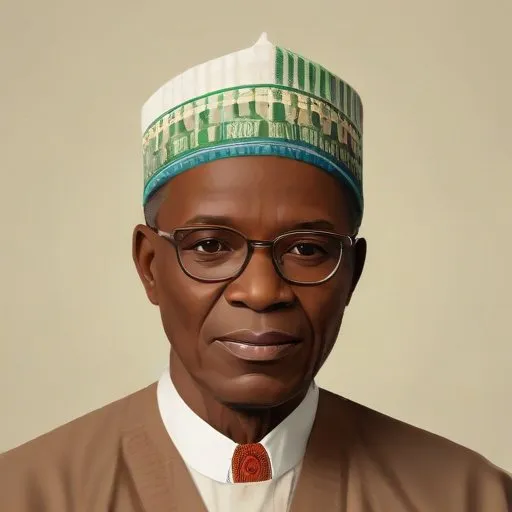
Shehu Shagari: The First Democratically Elected President of Nigeria
Early Life and Educational Background
Shehu Shagari, born on February 25, 1925, in Shagari, Nigeria, was a Sunni Muslim Fulani from a polygamous family. His father, Aliyu Shagari, was a farmer, trader, and herder who later became the Magajin Shagari (village head). After his father's death, Shagari's elder brother, Bello, briefly took on the mantle as Magaji Shagari.
Education and Early Career
Shagari started his education in a Quranic school and later attended Yabo elementary school from 1931 to 1935. He then proceeded to Sokoto for middle school from 1936 to 1940 and attended Barewa College from 1941 to 1944. Shagari later matriculated at the Teachers Training College, in Zaria, Kaduna, Nigeria, between 1944 and 1952. He worked as a visiting teacher at Sokoto Province from 1953 to 1958 and was also a member of the Federal Scholarship Board from 1954 to 1958.
Rise to Political Prominence
Shagari's entry into politics began in 1951, and he was elected into the House of Representatives in 1954. He held various cabinet posts as a federal commissioner or federal minister between 1958 and 1975.
Presidency and Legacy
Shehu Shagari became the first democratically elected president of Nigeria in 1979, after the transfer of power by military head of state General
Olusegun Obasanjo. This marked the beginning of the Second Nigerian Republic. As president, Shagari presided over the mass deportation of West African migrants in 1983, which primarily impacted Ghanaian migrants in Nigeria.
Philosophical Contributions and Beliefs
Shagari's presidency was marked by his commitment to democracy and national unity. He believed in the importance of a free press and independent judiciary, which earned him respect from the international community.
Controversies and Public Perception
Shagari's presidency was not without controversy. The mass deportation of West African migrants in 1983 was widely criticized, and his government's handling of the economy was also a subject of debate.
Personal Milestones and Key Life Events
- February 25, 1925: Born in Shagari, Nigeria
- 1951: Entered politics
- 1954: Elected into the House of Representatives
- 1979: Became the first democratically elected president of Nigeria
- 1983: Presided over the mass deportation of West African migrants
- December 28, 2018: Passed away at the age of 93
Historical Context and Legacy
Shehu Shagari's presidency marked a significant milestone in Nigeria's transition to democracy. His commitment to democratic principles and national unity continues to inspire generations of Nigerians. Despite the controversies that surrounded his presidency, Shagari's legacy remains an important part of Nigeria's history.
FAQ
What was Shehu Shagaris role in Nigerian politics?
Shehu Shagari was the 6th President of Nigeria, serving from 1979 to 1983. He was a key figure in Nigerian politics and played a role in the countrys transition to democracy.
How did Shehu Shagaris presidency impact Nigeria?
Shehu Shagaris presidency was marked by efforts to modernize and develop Nigerias economy. He implemented policies aimed at reducing poverty and improving infrastructure.
What were Shehu Shagaris achievements as President?
Shehu Shagaris achievements as President include the creation of new states, the establishment of the Federal Polytechnic program, and the development of Nigerias infrastructure.
How did Shehu Shagaris leadership style impact Nigerian politics?
Shehu Shagaris leadership style was marked by a commitment to democracy and inclusivity. He worked to build consensus and promote national unity during his presidency.
What is Shehu Shagaris legacy in Nigerian politics?
Shehu Shagari is remembered as a dedicated leader who worked to promote democracy and development in Nigeria. His legacy continues to inspire new generations of Nigerian leaders.