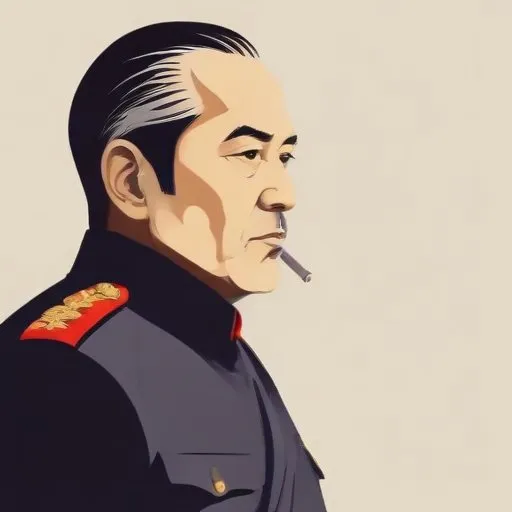
Shigeyasu Suzuki: The Lieutenant General Who Witnessed History Unfold
A Career Marked by Service and Sacrifice
Shigeyasu Suzuki is remembered as a prominent lieutenant general in the Imperial Japanese Army during the early years of the Second Sino-Japanese War. His remarkable military career, which spanned over three decades, was marked by service in various capacities, including as a military attaché to the Empire of Russia, where he witnessed the Russian Revolution and the fall of the Romanov dynasty.
Early Life and Education
Born on September 1, 1886, in Ishikawa Prefecture, Japan, Suzuki was the second son of a former samurai in the service of Kaga Domain. He attended military preparatory schools in Nagoya before graduating from the 17th class of the Imperial Japanese Army Academy in 1905. This laid the foundation for his future rise through the ranks of the Imperial Japanese Army.
Rise Through the Ranks
Suzuki's military career was marked by a series of promotions and assignments. He graduated from the 24th class of the Army Staff College in 1912 and went on to serve as a military attaché to the Empire of Russia from 1916 to 1918. This experience gave him a unique perspective on the Russian Revolution and the subsequent overthrow of the Romanov dynasty. After his return to Japan, he became the Chief of Staff of the IJA 12th Division.
The 1920s saw Suzuki's star continue to rise. He was promoted to lieutenant colonel in March 1924 and attached to the Imperial Japanese Army General Staff from December of that year. He was subsequently posted to Poland as military attaché in February 1928 and concurrently to Latvia in September 1929. His promotion to colonel in March 1928 marked another milestone in his career.
Key Assignments and Promotions
- March 1933: Promoted to major general
- August 1932 to March 1934: Served as an instructor at the Army Staff College
- 1934 to 1935: Head of the 4th Bureau in the General Staff
- 1935 to 1936: Head of the 1st Bureau
- December 1936: Promoted to lieutenant general, just before the outbreak of the Second Sino-Japanese War
Command and Combat
As lieutenant general, Suzuki was given command of the IJA 11th Independent Mixed Brigade under the aegis of the Kwantung Army. This marked the beginning of his involvement in combat, as he led his brigade in battles during the Second Sino-Japanese War.
Legacy of Service
Shigeyasu Suzuki's military career, which spanned over three decades, was marked by service, sacrifice, and a commitment to his country. His experiences as a military attaché to the Empire of Russia and his subsequent rise through the ranks of the Imperial Japanese Army make him a fascinating figure in Japanese military history. His legacy continues to be felt, serving as a reminder of the dedication and bravery of those who have served their country in times of war and peace.
FAQ
What were Shigeyasu Suzukis military achievements?
Shigeyasu Suzuki was a Japanese general who played a significant role in the countrys military expansion during the early 20th century. He was particularly known for his campaigns in China and his leadership during World War II.
What was Shigeyasu Suzukis role in the Japanese military?
Shigeyasu Suzuki was a prominent figure in the Japanese military, serving as a general and later as the Chief of the Army General Staff. He was a key advisor to the government and played a significant role in shaping Japans military strategy during World War II.
How did Shigeyasu Suzukis experiences influence his military career?
Shigeyasu Suzukis experiences as a soldier in the Russo-Japanese War and as a military attaché in Europe greatly influenced his military career. He was a strong advocate for modernization and reform in the Japanese military.
What were Shigeyasu Suzukis views on Japans role in World War II?
Shigeyasu Suzuki was a strong supporter of Japans military expansion during World War II, believing that it was necessary for the countrys survival and prosperity. He played a key role in planning and executing the countrys military campaigns.
What is Shigeyasu Suzukis legacy in Japanese history?
Shigeyasu Suzukis legacy is that of a prominent military leader who played a significant role in shaping Japans military strategy during World War II. His actions and decisions had far-reaching consequences for the country and the world.