


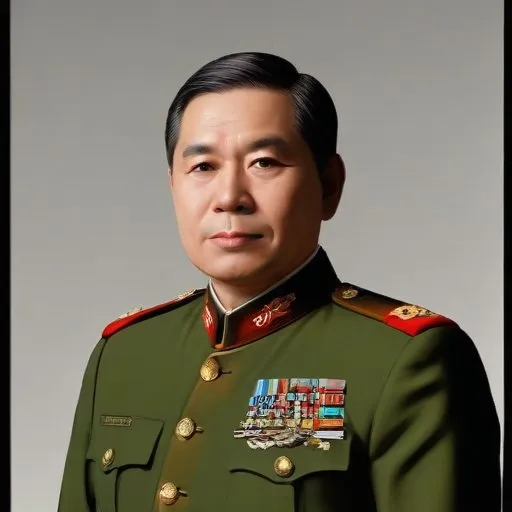
A Japanese general who led the invasion of Malaya and the Philippines during World War II, known for his brutal tactics and war crimes. He was later tried and executed for his atrocities.
Tomoyuki Yamashita is notoriously known for leading Japanese forces during the invasion of Malaya and the Battle of Singapore, earning him the nickname "The Tiger of Malaya." His conquest of Malaya and Singapore in a mere 70 days led to the British Prime Minister Winston Churchill calling the fall of Singapore to Japan the worst disaster and largest capitulation in British military history.
Born on November 8, 1885, in Osugi, a village in what is now part of Toyo, Kchi Prefecture, Shikoku, Japan, Yamashita was the second son of a local doctor. He attended military preparatory school and graduated from the Imperial Japanese Army Academy in 1906.
Yamashita's military career took off during World War II, where he played a crucial role in the Japanese invasion of Southeast Asia. He led the 25th Army to a series of victories, including the capture of Singapore, which earned him the respect and admiration of his peers and superiors.
The Battle of Singapore, which lasted from January 8 to February 15, 1942, was a pivotal moment in Yamashita's career. Despite being outnumbered, his innovative tactics and clever use of terrain allowed him to outmaneuver and defeat the British forces, leading to the surrender of Singapore.
Later in the war, Yamashita was assigned to defend the Philippines from the advancing Allied forces. Although he was unable to prevent the superior Allied forces from advancing, his troops committed numerous atrocities, including the Manila Massacre, which resulted in the deaths of at least 350,000 to 450,000 people.
After the war, Yamashita was tried for war crimes committed by troops under his command during the Japanese defense of the occupied Philippines in 1944. Despite denying ordering or knowing about the atrocities, he was found guilty and executed on February 23, 1946.
The ruling against Yamashita, which held the commander responsible for subordinates' war crimes as long as the commander did not attempt to discover and stop them from occurring, came to be known as the Yamashita standard. This landmark ruling has had a significant impact on the prosecution of war crimes and has been used as a precedent in numerous international trials.
Tomoyuki Yamashita's legacy is complex and controversial, marked by both his military prowess and his role in perpetuating war crimes. While he is remembered as a skilled commander and tactician, his actions during World War II have left a lasting stain on his reputation and the history of Japan.
Born in 1884
Led the Imperial Japanese Navy during World War II, masterminding the surprise attack on Pearl Harbor, and later became a symbol of Japanese military power and strategy.
Born in 1901
The Japanese emperor who ruled from 1926 to 1989, leading the country through World War II and its post-war reconstruction, and is known for his symbolic role in Japanese politics and culture. He is also remembered for his rare public apology for Japan's wartime atrocities.
Born in 1887
A Japanese general who led the invasion of the Philippines during World War II and was later tried for war crimes, known for his role in the Bataan Death March.
Born in 1879
A Japanese field marshal and politician who served as the 48th Minister of War, playing a significant role in World War II and later facing trial for war crimes. He was a prominent figure in Japan's military and political circles during a tumultuous period in history.
Born in 1903
A Japanese diplomat who served as the ambassador to the United Nations, known for his efforts to promote international cooperation and resolve global conflicts. He played a key role in shaping Japan's post-war foreign policy.
Born in 1881
A Japanese Imperial Army general who played a key role in the invasion of China and was later convicted of war crimes. He was a prominent figure in the Second Sino-Japanese War.
