


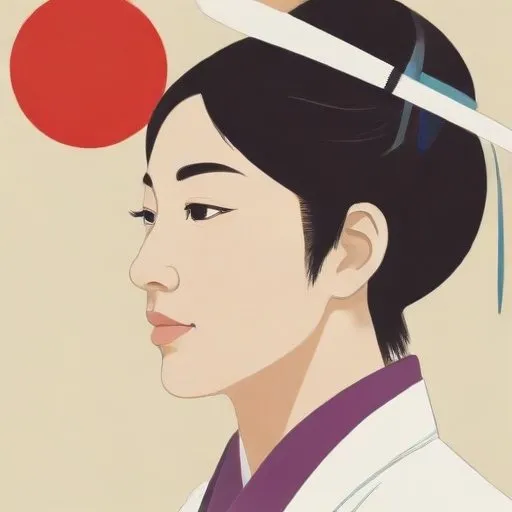
A 16th-century Korean artist and writer who excelled in poetry, calligraphy, and painting, creating iconic works that showcased her mastery of traditional Korean art forms.
Shin Saimdang, a luminary of 16th century Korea, was a master of multiple arts, leaving an indelible mark on the world of literature, calligraphy, poetry, and art. Born in 1504, this remarkable woman was not only a prolific creator but also a devoted mother, raising one of Korea's most influential Confucian scholars, Yi Yi.
Saimdang's artistic prowess was evident from an early age, and her talent was nurtured by her family's strong emphasis on education. Her father, Shin Myeonghwa, a government official and friend of the scholar Jo Gwangjo, played a significant role in encouraging her creative pursuits.
Saimdang's greatest legacy, however, lies in her role as a mother and educator. Her son, Yi Yi, went on to become one of Korea's most influential Confucian scholars, and her dedication to his education and upbringing played a significant role in shaping his remarkable career.
Saimdang's own philosophical beliefs were deeply rooted in Confucianism, which emphasized the importance of education, family, and social responsibility. Her writings and teachings reflected these values, inspiring generations to come.
Saimdang's impact on modern society is multifaceted, with her contributions extending far beyond the realm of art and literature. Her legacy continues to inspire Koreans and non-Koreans alike, serving as a testament to the power of dedication, hard work, and creativity.
In an era where women's roles were largely restricted, Saimdang's achievements serve as a beacon of hope and empowerment for women everywhere. Her story is a powerful reminder that, with determination and perseverance, anyone can overcome obstacles and achieve greatness.
Saimdang's life was marked by significant events that shaped her character and informed her work. Born in 1504, she spent her early years in Gangneung, where her maternal family's home, Ojukheon, still stands today.
Saimdang's remarkable life and achievements are a testament to the cultural and intellectual vibrancy of 16th century Korea. Her legacy continues to inspire Koreans and non-Koreans alike, solidifying her place as one of Korea's most beloved and respected cultural icons.
As we reflect on Saimdang's remarkable life, we are reminded of the power of creativity, dedication, and perseverance. Her story serves as a beacon of hope, inspiring us to strive for greatness and to cherish the beauty of art, literature, and music that bring us closer to our humanity.
Born in 1916
A pioneering figure in modern Korean poetry, known for introducing symbolism and imagery to Korean literature, and playing a key role in shaping the country's literary identity.
Born in 1536
A leading figure in Korean Neo-Confucianism, he developed a comprehensive philosophical system that emphasized the importance of education, morality, and self-cultivation. His teachings had a profound impact on Korean thought and culture.
