


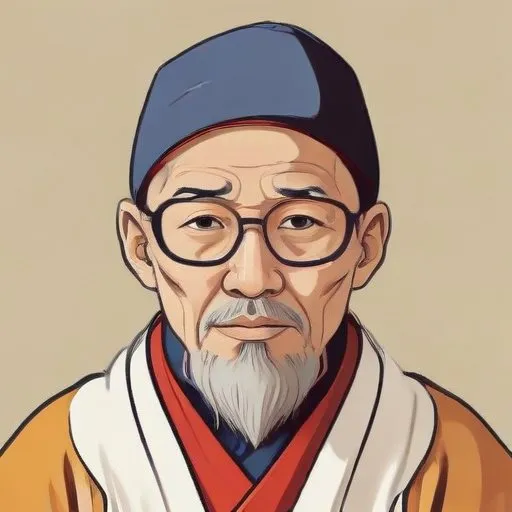
A leading figure in Korean Neo-Confucianism, he developed a comprehensive philosophical system that emphasized the importance of education, morality, and self-cultivation. His teachings had a profound impact on Korean thought and culture.
Yi I, a Korean philosopher, writer, and Confucian scholar of the Joseon period, is renowned for his profound contributions to Korean philosophy, literature, and politics. He is often referred to by his art name, Yulgok, or "Chestnut Valley," and is regarded as one of the most influential thinkers of his time.
Born in 1536 in Gangneung, Gangwon Province, Yi I was the son of a Fourth State Councillor, Yi Wonsu, and an accomplished artist and calligrapher, Shin Saimdang. His early years were marked by intense study and a thirst for knowledge. By the age of seven, he had completed his lessons in the Confucian classics, and at 13, he passed the Civil Service literary examination.
Yi I's intellectual pursuits were greatly influenced by his teacher, Baek Ingeol, the successor of Jo Gwangjo. This mentorship played a significant role in shaping Yi I's philosophical outlook and literary style.
Yi I's philosophical contributions are multifaceted and far-reaching. He is known for his emphasis on the importance of education, self-cultivation, and moral rectitude in governance. His thoughts on Confucianism, Taoism, and Buddhism demonstrate a deep understanding of the complexities of human nature and the role of the individual in society.
One of Yi I's most celebrated works is his winning thesis, "Cheondochaek" or "Book on the Way of Heaven." This masterpiece showcases his profound knowledge of history, Confucian philosophy, and Taoism, earning him top honors in the civil exams for nine consecutive times.
Yi I's government service spanned various positions, from document officer to participatory writer of the Myeongjong Annals. His experiences in different offices informed his thoughts on governance and the role of the state in promoting the common good.
At 34, Yi I authored "Dongho Mundap," an eleven-article political memorial that outlined his vision for a righteous government. This work demonstrates his commitment to creating a just and equitable society, underscoring the importance of moral leadership and responsible governance.
Yi I's influence on Korean philosophy, literature, and politics is immeasurable. He is remembered as a dedicated Confucian scholar, a skilled writer, and a visionary thinker who continues to inspire generations.
Yi I's enduring legacy is a testament to the power of knowledge, wisdom, and dedication to the pursuit of human flourishing.
Born in 1130
A leading figure in Confucianism, he synthesized Confucian classics into a coherent philosophical system, influencing East Asian thought for centuries. His teachings emphasized moral cultivation and self-reflection.
Born in 1472
A 16th-century Chinese philosopher who merged Confucianism with Taoist and Buddhist elements, emphasizing individual moral intuition and the unity of knowledge and action.
