


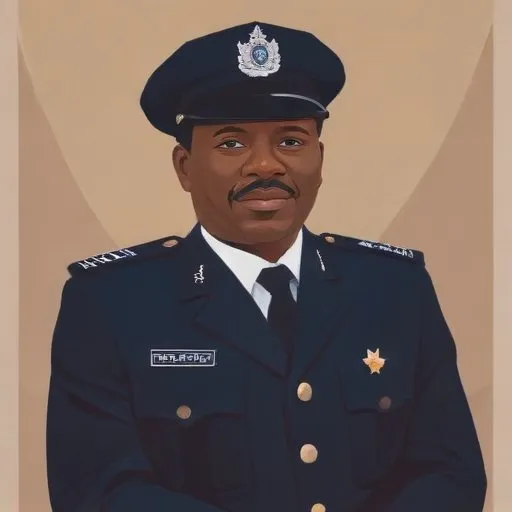
First President of Sierra Leone, leading the country from 1971 to 1985 and implementing a one-party system. He's known for his authoritarian rule and human rights abuses.
Siaka Probyn Stevens, the erstwhile leader of Sierra Leone, is remembered for his transformative presidency from 1971 to 1985, during which he spearheaded the country's transition from a parliamentary democracy to a republic. He is also revered for his instrumental role in shaping the country's economic landscape through the formation of the Mano River Union, a trifecta of economic cooperation with Liberia and Guinea.
Born on August 24, 1905, in Moyamba, Moyamba District, Stevens' early life was shaped by his Limba father and Mende mother. Raised in Freetown, Stevens completed his primary education and secondary school at Albert Academy. He joined the Sierra Leone Police Force in 1923, rising to the rank of First Class Sergeant and Musketry Instructor by 1930.
Stevens' foray into politics began in 1946 when he co-founded the Sierra Leone People's Party (SLPP). He was elected to the Legislative Council in 1951 and became the Minister of Internal Affairs and Mineral Resources in 1957.
In 1967, Stevens broke away from the SLPP to form the All People's Congress (APC), which won the general elections, propelling him to the position of Prime Minister. In 1971, he oversaw the country's transition to a republic, becoming its first president.
Stevens' presidency was marked by significant economic and infrastructural developments, including the establishment of the National Shipping Line, the Bank of Sierra Leone, and the construction of the Sierra Leone Brewery Limited.
He also played a crucial role in shaping the country's foreign policy, serving as the Chairman of the Organisation of African Unity (OAU) from 1980 to 1981.
Stevens' leadership style, however, was often criticized for being autocratic and corrupt. He was known for consolidating power through patronage and nepotism, which led to widespread corruption and exploitation.
Stevens married Rebecca Stevens, and the couple had five children together. He was known for his love of sports, particularly football, and was the patron of several sports clubs in Sierra Leone.
Stevens retired from office in 1985, handing over the reins to his chosen successor, Major-General Joseph Saidu Momoh. He passed away on May 29, 1988, in Freetown, leaving behind a complex legacy that continues to shape Sierra Leone's political landscape.
Despite controversies surrounding his rule, Siaka Stevens remains an important figure in Sierra Leone's history, credited with laying the foundation for the country's economic growth and regional cooperation.
89 Years Old
A Sierra Leonean soldier and politician who served as the 2nd President of Sierra Leone from 1985 to 1992, known for his military background and authoritarian rule.
Born in 1921
American actor known for starring in sci-fi and Western films, particularly in the 1950s and 1960s, including the classic film "Tarantula."
