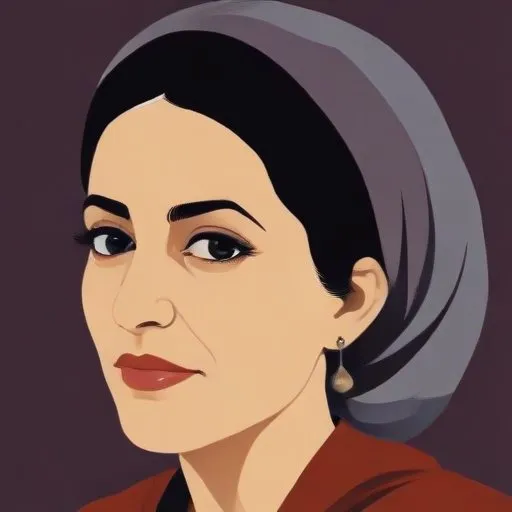
Simin Behbahani: The Lioness of Iran's Modern Persian Poetry
A Legendary Voice in Modern Persian Literature
Simin Behbahani is renowned for her captivating ghazal-style poetry, which has left an indelible mark on modern Persian literature. As an icon of Iranian intelligentsia and literati, she is affectionately referred to as the "Lioness of Iran," a testament to her fearless voice and poetic prowess.
Early Life and Family: A Legacy of Literary Excellence
Born on July 20, 1927, Simin Behbahani was the daughter of Abbas Khalili, a poet, diplomat, and editor, and Fakhr-Ozma Arghun, a poet, teacher, and progressive women's rights activist. Her family's rich literary heritage paved the way for her own remarkable journey in poetry.
A Poetic Journey: From Char Pareh to Ghazal
Behbahani began writing poetry at the tender age of 12 and published her first poem at 14. Initially inspired by the Char Pareh style of
Nima Yooshij, she later transitioned to the ghazal form, which became her hallmark. By incorporating theatrical subjects and everyday conversations into her poetry, she expanded the traditional Persian verse forms, producing some of the most significant works of 20th-century Persian literature.
Career Highlights and Major Works
- Published numerous collections of poetry, including "The Broken Idol" and "The Marble Pendant"
- Contributed to various literary journals and publications
- Served as a member of the Iranian Writers' Association and the Academy of Persian Language and Literature
Awards and Honors
- Nominated twice for the Nobel Prize in Literature
- Received the Human Rights Watch Hellman-Hammett Award
- Awarded the Norwegian Authors' Union Prize for Freedom of Expression
Influence on Modern Society and Legacy
Behbahani's poetry has inspired generations of Iranians and Persian language speakers worldwide. Her work has been translated into numerous languages, cementing her reputation as a literary icon. Her courageous voice and commitment to social justice have made her a beacon of hope for those advocating for human rights and women's empowerment.
Personal Milestones and Key Life Events
- Survived imprisonment and persecution during the Iranian Revolution
- Continued to write and publish poetry despite facing censorship and repression
- Remained a vocal advocate for women's rights and social justice throughout her life
Philosophical Contributions and Beliefs
Behbahani's poetry reflects her deep commitment to social justice, human rights, and women's empowerment. Her work often critiques the oppressive systems that stifle individual freedom and creativity. Through her poetry, she has inspired countless individuals to challenge the status quo and strive for a more just and equitable society.
Quintessential Quotes and Memorable Sayings
- "The path of freedom is not a straight line, but a labyrinth."
- "Poetry is the voice of the voiceless, and I am but a messenger."
A Lasting Legacy
Simin Behbahani's remarkable life and poetry have left an indelible mark on modern Persian literature and Iranian society. As the "Lioness of Iran," her fearless voice and unwavering commitment to social justice continue to inspire generations of poets, activists, and individuals around the world.
FAQ
What is Simin Behbahanis contribution to Iranian literature?
Simin Behbahani is one of Irans most celebrated poets, known for her powerful and evocative poetry that explores themes of love, freedom, and social justice. She is often referred to as the Lioness of Iran.
What awards has Simin Behbahani won?
Simin Behbahani has won numerous awards for her poetry, including the Bjornson Prize in 2009 and the Jan Michalski Prize in 2013. She was also nominated for the Nobel Prize in Literature in 2005.
What is Simin Behbahanis role in the Iranian womens movement?
Simin Behbahani has been an advocate for womens rights and social justice in Iran, using her poetry as a means of expressing her views on the status of women in Iranian society.
How has Simin Behbahanis work been translated and received internationally?
Simin Behbahanis poetry has been translated into numerous languages, including English, French, and German. Her work has been praised by international literary critics and scholars, who see her as a powerful voice for Iranian literature.
What is Simin Behbahanis personal life like?
Simin Behbahani was born in 1927 in Tehran and grew up in a family of intellectuals. She has been married twice and has three children. Despite facing censorship and persecution in Iran, she has continued to write and advocate for social justice and womens rights.