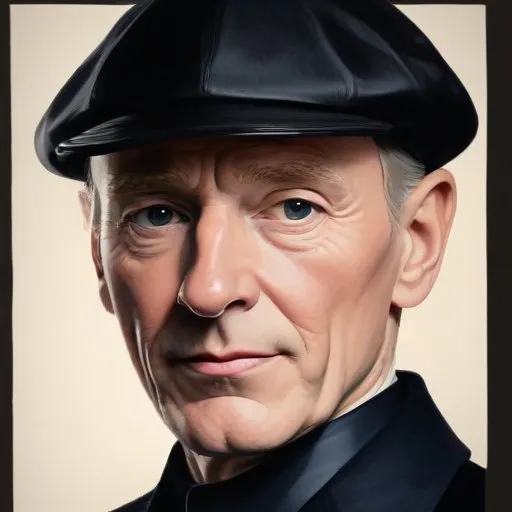
Simon Nicholson: The Pioneering Artist and Playwork Theorist
A Legacy of Creativity and Inventiveness
Simon Nicholson, a British painter, sculptor, and academic, is best known for his groundbreaking work in playwork and early education, particularly his theory of "Loose Parts." This innovative concept, outlined in his 1971 essay, revolutionized the way we approach play and creativity in children. As the son of renowned sculptor
Barbara Hepworth and artist
Ben Nicholson, Simon's artistic talents were nurtured from an early age.
Early Life and Education
Born on October 3, 1934, Simon attended Dartington Hall School before pursuing sculpture at the Royal College of Art from 1953 to 1954. He then went on to study archaeology and anthropology at Trinity College, Cambridge, from 1954 to 1957. This diverse academic background would later influence his approach to art and playwork.
Artistic Career and Influences
Like his parents, Simon lived and worked in St Ives from 1960 to 1964, where he was exposed to the vibrant artistic community of the time. His work is characterized by an interest in texture and materiality, often taking the landscape as its starting point. In 1964, he moved to the United States, where he taught at the Moore College of Art and Design, Philadelphia, and later at the University of Berkeley, California. During this period, he had solo exhibitions in San Francisco and Pittsburgh.
The Theory of Loose Parts
Simon's most significant contribution to the world of playwork and early education is his Theory of Loose Parts. This concept advocates for providing children with a variety of materials and objects that encourage creativity, inventiveness, and discovery. In his own words, "In any environment, both the degree of inventiveness and creativity, and the possibility of discovery, are directly proportional to the number and kind of variables in it." This theory has had a profound impact on the way we approach play and learning in children.
Teaching and Legacy
Simon returned to England in 1971, where he became an Open University lecturer until 1989. During this time, he developed the popular practical arts module TAD292, which included a week-long summer school that gained notoriety for its innovative approach to art and play. After his death in 1990, a retrospective exhibition was held at Falmouth College of Arts and Dartington Hall in 1999, celebrating his contributions to the world of art and playwork.
A Family of Artists
Simon came from a family of artists, with his parents, Barbara Hepworth and Ben Nicholson, being renowned figures in the art world. His grandparents,
William Nicholson and Mabel Pryde, were also artists, as were his aunt Nancy Nicholson, sister Rachel, and half-sister Kate Nicholson. His architect uncle, Christopher Nicholson, completed the talented family.
Influence and Impact
Simon Nicholson's work has had a lasting impact on the way we approach play, creativity, and education. His Theory of Loose Parts has influenced playground design, early education, and interactive installations worldwide. As a testament to his legacy, his ideas continue to inspire new generations of artists, educators, and playworkers.
FAQ
What is Simon Nicholsons artistic style?
Simon Nicholson is an English sculptor and painter known for his abstract and figurative works that often explore themes of nature, landscape, and the human experience.
What themes does Simon Nicholsons art often explore?
Simon Nicholsons art often explores themes of nature, landscape, and the human experience, drawing on his fascination with the natural world and our place within it.
How has Simon Nicholsons art been received critically?
Simon Nicholsons art has been critically acclaimed for its originality, emotional depth, and technical skill.
What exhibitions has Simon Nicholson participated in?
Simon Nicholson has participated in numerous exhibitions around the world, including solo and group shows in galleries and museums.
How does Simon Nicholsons artistic background influence his work?
Simon Nicholsons artistic background, which combines traditional techniques with modern materials and techniques, has a significant impact on his work, which often explores the intersection of nature and art.